Market consolidation is no longer a buzzword. It is the reality of the pet care industry. Over the last decade, I have watched the landscape shift from independent local clinics to massive corporate empires. As the founder of Boonpets, I see this shift every time we discuss supply chains with our partners in over 30 countries. The "Big Six" veterinary companies now hold the keys to the kingdom. If you are a procurement manager or a business owner, you cannot ignore this. This consolidation changes how products are bought, how prices are set, and how your brand must position itself to survive.
Identifying the Big Six: Who Controls the Majority of the Veterinary Market
The veterinary market is dominated by a handful of giants. These include Mars Veterinary Health (which owns VCA, Banfield, and BluePearl), IVC Evidensia, National Veterinary Associates (NVA), IDEXX, Zoetis, and Covetrus. While some focus on clinics, others control the diagnostics and supply chains. In my 12 years in this industry, I’ve seen these entities move from being simple service providers to becoming vertically integrated powerhouses. They don't just treat pets; they own the data, the medicine, and the distribution channels.
This concentration of power is unprecedented. According to recent industry reports, corporate-owned practices in the US and Europe now account for a massive percentage of total industry revenue, even if they don't yet own the majority of physical rooftops. When one company owns 2,000+ clinics, their purchasing power is terrifyingly efficient. I remember a conversation with a distributor in Europe who lost a major account overnight because a "Big Six" player acquired their client and moved all procurement to a centralized global contract. That is the new stakes of the game.
The Impact of Corporate Ownership on Service Pricing and Competition
When a private equity firm buys a vet clinic, the goal is clear: increase EBITDA1. This usually leads to standardized pricing models across all locations. For the pet owner, this often means higher costs. For the competitor, it means facing a rival with deep pockets and sophisticated marketing. I have observed that as these groups grow, they implement "formulary" lists. This is a restricted list of approved products that every vet in their network must use. If your product isn't on that list, you are invisible to thousands of practitioners.
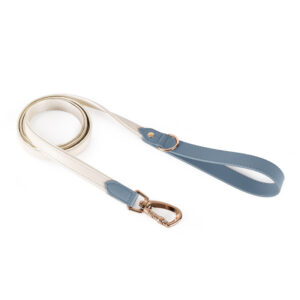
This standardization creates a barrier to entry for smaller brands. I once worked with a [Pet Accessory Distributor] who struggled because their premium leashes weren't "standardized" enough for a large corporate group's inventory system. The group wanted one SKU that worked everywhere, not a variety of unique designs. This drive for efficiency often sacrifices the "local feel" of a vet clinic, but it boosts the bottom line. It forces independent vets to either sell to the giants or find a way to offer something the giants cannot—usually highly personalized, premium service.
B2B Procurement Strategy: Why Large Veterinary Groups (LVGs) Impact Your Supply Chain
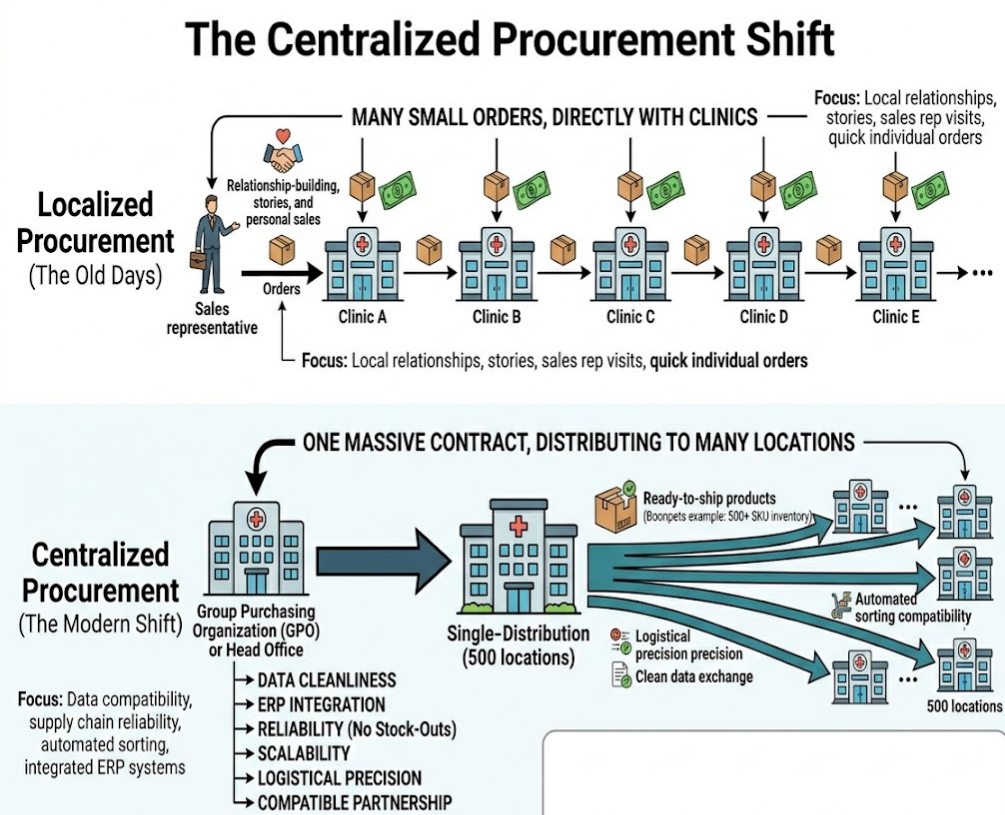
The rise of Large Veterinary Groups (LVGs) has completely flipped the procurement script. We are moving away from localized, relationship-based buying. Instead, we are entering an era of high-volume, data-driven procurement cycles. LVGs operate on "economies of scale." They want high-durability, cost-effective wholesale products that can be shipped in bulk. This creates a bifurcated market. On one side, you have the corporate giants looking for utility and price. On the other, you have independent specialists who need "differentiated" products to stand out.
Dive Deeper: The Centralized Procurement Shift In my experience, the shift to centralized procurement is the single biggest hurdle for modern suppliers. In the old days, a sales rep could visit ten clinics and get ten orders. Today, those ten clinics are owned by one office in a different time zone. That office doesn't care about the "story" of your brand as much as they care about your lead times, your defect rates, and your ability to integrate with their ERP system. I learned this the hard way years ago when we missed out on a large contract because our packaging wasn't compatible with a specific automated sorting system used by a major group. We realized that being a "good manufacturer" isn't enough anymore. You have to be a "compatible partner." This means your data must be as clean as your products. LVGs look for reliability above all else. They cannot risk a stock-out across 500 locations because one supplier had a shipping delay. This is why at Boonpets, we maintain 500+ ready-to-ship products. We realized that the "Big Six" environment demands a level of inventory readiness that smaller factories simply cannot provide. If you want to sell to these groups, you need to prove your scalability and your logistical precision.
From Private Equity to Specialized Care: Future Trends in Veterinary Infrastructure
Private equity isn't just buying general practices; they are moving into specialized care. We are seeing a massive influx of capital into emergency hospitals, oncology centers, and high-end diagnostic suites. This trend suggests that the "basic" vet care market is becoming a commodity, while the real profit is moving toward specialized, high-tech intervention. This creates a unique opportunity for product manufacturers. As clinics become more like hospitals, the gear they require must become more technical and professional.
For example, we’ve seen an increase in demand for specialized muzzles and recovery harnesses that meet medical-grade standards. The "Factory Floor" observation I’ve made recently is that the stitching requirements for a standard retail leash are very different from the requirements for a veterinary recovery sling. In our facility, we had to upgrade our heavy-duty bartack machines to ensure our recovery gear could support the weight of a 70kg dog post-surgery. As the infrastructure becomes more specialized, your products must follow suit. If you are still selling "basic" gear, you are competing on price alone. To win in the future, you must innovate for the specialized environments these corporate groups are building.
Governments are starting to take notice of this consolidation. In the UK, the Competition and Markets Authority2 (CMA) recently launched a review into the veterinary sector. They are worried that the "Big Six" are stifling competition and overcharging consumers. Similar whispers are happening in parts of North America. As a business owner, you need to watch these regulatory shifts closely. If the "Big Six" are forced to divest (sell off) clinics, we might see a resurgence of mid-sized regional groups. This would shift the procurement landscape once again.
Dive Deeper: Navigating the Regulatory Landscape Regulatory pressure is a double-edged sword for suppliers. On one hand, anti-monopoly laws might break up the giants, creating more diverse selling opportunities. On the other hand, new regulations often bring stricter compliance costs. I have seen how "transparency" laws in other industries eventually hit the supply chain. Soon, it won't be enough to just have a high-quality product; you will need to prove the ethical origin of every buckle and fabric. At Boonpets, we’ve stayed ahead by enforcing third-party inspections and strict quality control early. We saw that the larger the corporate buyer, the more "audit-heavy" the process becomes. They don't just trust your word; they want to see the ISO certifications3 and the test reports for tensile strength. I remember a client in North America who was nearly delisted from a major retail chain because their previous supplier couldn't provide documented proof of material safety. We stepped in and provided full transparency, which saved their season. This is the "trust" part of EEAT. In a regulated market, your documentation is just as important as your physical product. You must be prepared for a world where "because I said so" is no longer an acceptable answer for a procurement manager.

| Feature | Independent Vets | Corporate Groups (LVGs) |
|---|---|---|
| Primary Goal | Differentiation & Service | Efficiency & Profit |
| Order Volume | Low to Medium | Very High |
| Customization | High (Unique Designs) | Low (Standardization) |
| Documentation | Flexible | Very Strict (Audits Required) |
| Price Sensitivity | Moderate | High (Volume Discounts) |
The future of veterinary care is being written by the "Big Six," but the ending isn't set in stone. Whether you are selling to the giants or supporting the independent rebels, your strategy must be intentional. You need a partner who understands these shifts—someone who can provide the volume the giants need, or the unique customization the independents crave.
At Boonpets, we’ve spent over 11 years building the infrastructure to do both. We help you increase your sales and profit by providing gear that actually meets the demands of this changing market. If you’re looking to navigate these waters and need a reliable manufacturer who understands the stakes, I’m here to help.
Would you like me to send you our latest catalog of high-durability veterinary-grade accessories?
Footnote: