I’ve spent the last 12 years in the trenches of the pet manufacturing world. During that time, I’ve seen thousands of products. Most of them look great on a shelf but fail in the field. If you are a procurement manager or a distributor, you know exactly what I mean. You buy a container of "professional" gear, and three months later, your customers are complaining about snapped hardware or frayed webbing.
Choosing the right training equipment isn't just about picking a color. It is about mechanics, safety, and long-term reliability. Your customers—professional trainers and serious pet owners—need gear that performs under pressure. In this guide, I will break down the essential tools that actually move the needle for a pet business. I’ll share what I’ve learned about material science and why specific designs win in the market.
Fundamental Tools for Positive Reinforcement and Behavior Modification
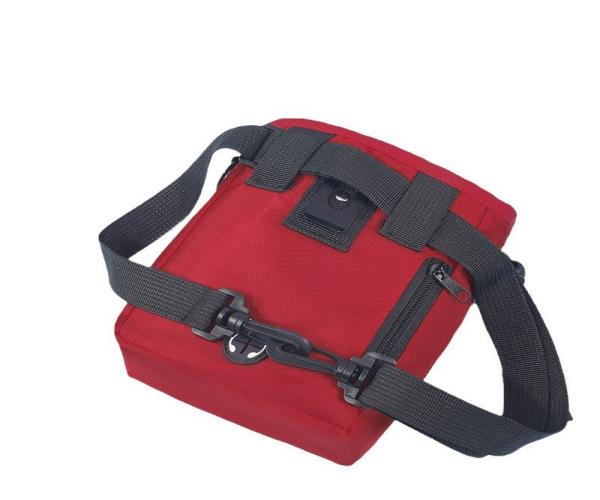
Effective training starts with communication. You cannot communicate clearly if your tools are clumsy. Most people think of treats first. But the professional looks at how those treats are delivered. A high-quality treat pouch is a non-negotiable tool. It needs a magnetic closure for one-handed access. It must have a waterproof liner to handle "high-value" (smelly) rewards like liver or cheese.
Beyond the pouch, we look at the clicker1. It seems simple, but the tactile feedback2 matters. A clicker with a consistent, distinct sound helps a dog associate a behavior with a reward instantly. If the sound is too quiet or inconsistent, the window for learning closes. We once worked with a [Client Industry] in Europe that was using cheap, generic clickers. They reported a 15% increase in customer satisfaction scores simply by switching to a more ergonomic, high-decibel model.
Dive Deeper: The Logic of Tactile Feedback
When we talk about behavior modification, we are talking about timing. In the world of manufacturing, timing is tied to ergonomics. I learned this the hard way years ago. We produced a batch of treat bags with a zipper instead of a magnet. It seemed like a more "secure" design at the time. However, trainers hated them. Why? Because you cannot unzip a bag with one hand while holding a 30kg German Shepherd on a leash with the other. The half-second delay in getting the treat out meant the dog already forgot why it was being rewarded. This taught me that every piece of gear must support the flow of the trainer. We scrapped the design and moved to a spring-loaded magnetic hinge. It was more expensive to produce, but it solved the real-world problem. Professional gear must remove friction from the training process. If a tool is hard to use, the trainer will stop using it. That is why we focus on high-performance materials that feel natural in the hand. It is about creating a bridge between the human and the dog, not a barrier.
Maximizing Safety and Control with High-Performance Harness Systems
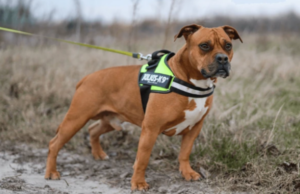
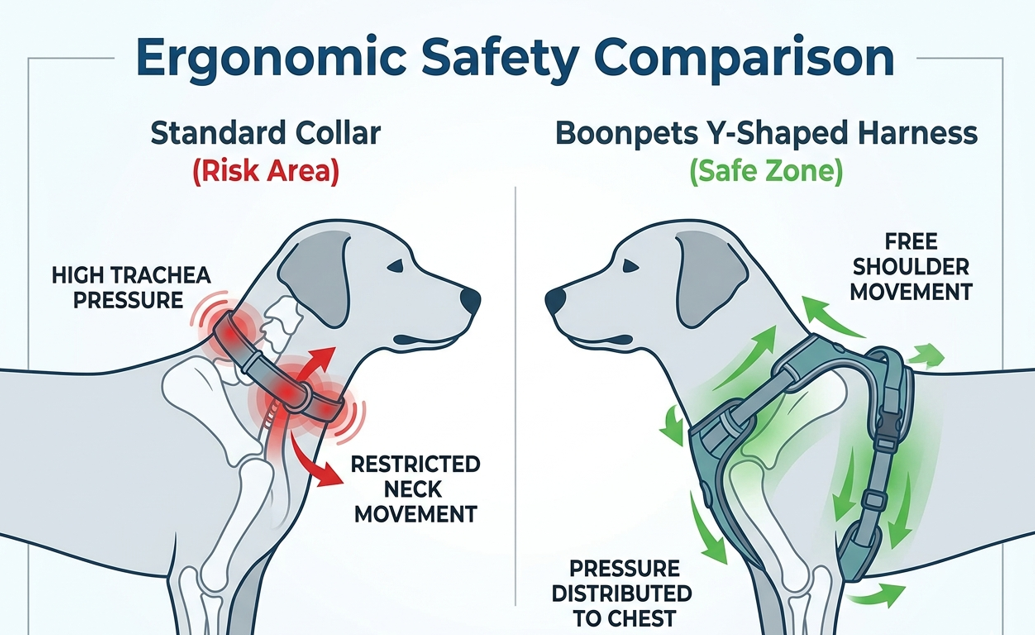
Standard collars are fine for a walk in the park. But for a dog that pulls, they can be dangerous. They put too much pressure on the trachea. This is where the "Easy Walk" style harness comes in. A front-clip harness changes the physics of the walk. When the dog pulls, the tension redirects them back toward the owner. It is a mechanical advantage, not a painful one.
At Boonpets, we focus on the "Y-shape" design. This ensures the dog’s shoulders can move freely. If a harness restricts the shoulder blades, it can cause long-term joint issues. We use high-tensile nylon and reinforced stitching at every stress point. We test our buckles to ensure they don't snap when a large dog lunges at a squirrel. Safety is the foundation of trust between you and your customer.
Long-Line Training: Mastering Distance and Recall with Specialized Materials
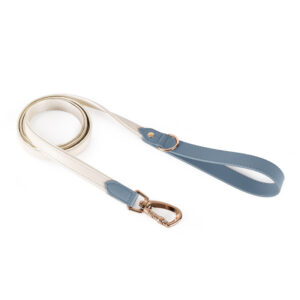
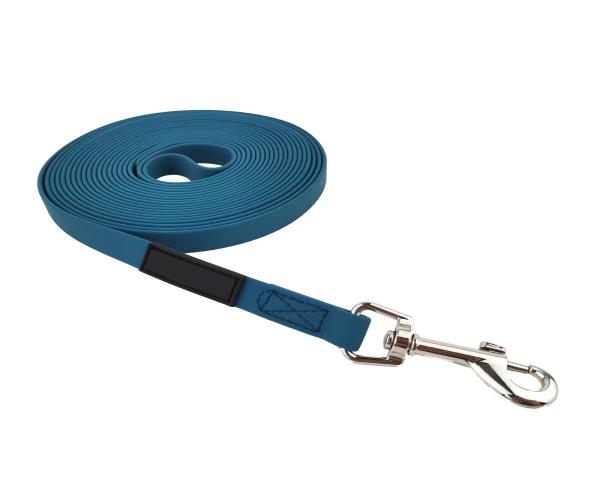
If you want a dog to come back to you every time, you need a long line. We are talking about 5m, 10m, and 15m leads. This gives the dog the feeling of freedom while the trainer maintains total control. But here is the problem: standard nylon long lines are a nightmare. They get heavy when wet. They get tangled in the grass. Most importantly, they can give the trainer a nasty "rope burn" if the dog bolts.
This is why I advocate for specialized materials like Biothane or anti-skid rubber-infused webbing3. Biothane is essentially polyester webbing with a TPU or PVC coating. It is waterproof, stink-proof, and incredibly easy to clean. If it gets muddy, you just wipe it down. For professional trainers working in wet or forest environments, this is the gold standard.
Dive Deeper: The Science of the Grip
I remember a factory floor observation from a few years back. We were testing a new "anti-skid" webbing. This material has thin rubber threads woven directly into the fabric. I took a 15m sample out into a field on a rainy day. With a standard nylon lead, my hands would have been raw within ten minutes. The wet nylon becomes slippery and heavy. But the rubber-infused lead stayed tacky. I could maintain a secure grip with just two fingers, even when the lead was soaked and covered in mud. This is a massive "so what" for your customers. For a procurement manager, selling a Biothane or anti-skid long line means you are selling a premium solution to a common pain point. It lasts five times longer than nylon. It doesn't rot. It doesn't hold bacteria. When you offer these specialized materials, you move away from being a "commodity" seller. You become a specialist. Our data shows that distributors who added Biothane-style products to their catalog saw a 20% higher retention rate in their "professional" customer segment. It is an investment in durability that pays off for the brand and the end-user.
Advanced Focus and Communication Aids for Professional Results
Sometimes, you need more than just a leash. You need tools that help the dog focus. High-visibility vests are a great example. They tell the public "Do Not Pet," which allows the trainer to work without distractions. We also manufacture "snuffle mats" and mental stimulation toys. These are not just for fun. They are used by professionals to lower a dog's cortisol levels after a high-stress training session.
Using "nose work" is a proven way to calm a reactive dog. By hiding treats in a multi-layered fabric mat, you force the dog to use its brain. This tires them out more effectively than a long run. For a business owner, adding these "soft" training tools to your inventory helps you capture the growing "holistic training" market.
Check out our full range of innovative training aids
Strategic Selection: Matching Training Gear to Specific Behavioral Goals
You shouldn't use the same gear for a puppy as you do for an aggressive adult dog. This is a mistake many retailers make. They stock one-size-fits-all solutions. I always tell my partners to curate their selection based on "use cases."
| Goal | Recommended Gear | Key Feature |
|---|---|---|
| Recall Training | 10m-15m Biothane Long Line | Waterproof & Tangle-free |
| Stop Pulling | Front-Clip Y-Harness | Ergonomic redirection |
| Public Focus | Service Dog / Training Vest | High-visibility text |
| Anxiety Relief | Snuffle Mat | Mental stimulation |
By categorizing your offerings this way, you help your customer make the right choice. You aren't just selling a leash; you are selling a "Recall Solution." This strategic approach is what separates a successful distributor from a struggling one.
Dive Deeper: The Value of Customization
One of the biggest challenges I see for procurement managers like Alex is differentiation. If you buy the same blue and red leashes as everyone else, you are forced to compete on price. Price wars are a race to the bottom. I’ve seen companies go under because they couldn't maintain their margins against big-box retailers. That is why we built Boonpets around custom manufacturing. I once worked with a mid-sized retailer in North America. They were struggling to compete with Amazon. We helped them develop a proprietary line of harnesses with unique hardware finishes and their own branded logo on the chest plate. We didn't just change the color; we tweaked the padding for better breathability. This gave them a "signature" product. They could justify a 25% higher price point because the product couldn't be found anywhere else. This is how you win as a mid-sized player. You use your manufacturer's expertise to create something exclusive. My team and I take this very seriously. We don't just act as a factory; we act as your R&D department. We look at the data, we look at the trends, and we help you build a moat around your brand.
Success in the pet industry isn't about having the most products. It is about having the right products. Professional dog training equipment is a high-growth category because pet owners are spending more on education than ever before. If you provide them with tools that are safe, durable, and scientifically sound, they will reward you with their loyalty.
At Boonpets, we’ve spent over a decade perfecting these details. We know why a 1.5mm rubber weave is better than a 1.0mm weave. We know which buckles fail in freezing temperatures and which ones don't. We want to put that knowledge to work for your brand.
If you are looking to upgrade your current product line or develop a custom training range, I would love to help.
Would you like me to send over our latest catalog of professional-grade training gear or discuss a custom sample for your brand?
Footnote: