You see a French flag on a bag of kibble, and your brain instantly associates it with premium quality. But the supply chain reality is far more complex.
As a procurement manager or business owner, you already know a brand's headquarters rarely matches its manufacturing floor. The geographic origin of a company does not guarantee where the physical product is made.
I’ve spent the last 11 years engineering manufacturing solutions1 for global pet brands. When clients ask me how to replicate the consistency of an industry giant like Royal Canin, I point them to a critical distinction. You must separate "brand origin" from "production reality."
In this guide, I break down Royal Canin’s shift from European legacy to global manufacturing. More importantly, I will share the exact supply chain lessons you can steal to build a resilient, high-margin pet brand of your own.
The Birthplace of Royal Canin: Tracing Its Authentic French Heritage
Royal Canin was undeniably born in Europe.
In 1968, a French veterinary surgeon named Jean Cathary created his first science-based pet food in a small village. He formulated diets based on clinical observation rather than marketing trends.
This European origin story is a massive asset. It anchors the brand in a legacy of scientific rigor and veterinary trust. For decades, the entire operation was uniquely European, with production tightly centralized in France.
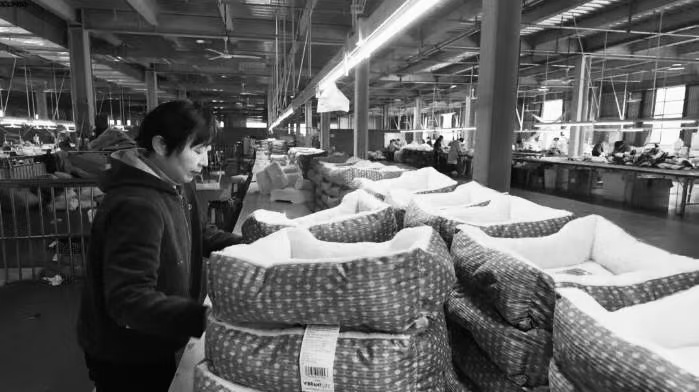
Yet, a legacy story only gets you so far. When demand scales globally, centralized manufacturing becomes an operational bottleneck. Shipping heavy bags of food across oceans destroys margins and slows down response times.
Growth requires adaptation. The brand had to evolve past its borders.
The Mars Acquisition: The Strategic Transition from European Ownership to an American Global Conglomerate
Everything changed in 2001. Mars, Incorporated—an American multinational giant—acquired Royal Canin.
This single move officially decoupled the brand’s geographic origin from its corporate ownership. Royal Canin was no longer a privately held European entity. It became a strategic pillar within a massive global conglomerate.

Many purists worried this American buyout would dilute the French quality. The opposite happened. Mars injected deep capital into the brand, allowing Royal Canin to construct state-of-the-art facilities across the globe.
They kept the global headquarters in Aimargues, France, to maintain the brand’s identity. However, they shifted operational control to a hyper-localized model. This is a masterclass in strategic scaling.
Global Manufacturing Footprint: Are Your Royal Canin Products Actually Manufactured in Europe Today?
If you buy a bag of Royal Canin in North America, it did not cross the Atlantic.
It was almost certainly manufactured in Missouri, South Dakota, or Ontario. If you purchase it in Asia, it was likely produced in their specialized Shanghai facility.
This localized approach2 is not about cutting corners. It is about supply chain velocity and consistency. By building regional hubs, Mars reduced freight costs, mitigated international shipping delays, and customized their formulas to local raw material availability.
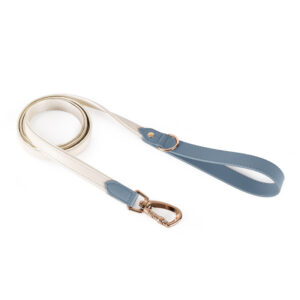
This mirrors my precise approach to hardware and textile manufacturing. During a recent walk-through of our webbing lamination line at BoonPets, I watched our engineers aggressively adjust the cooling temperatures. Why? Because that specific batch of leashes was shipping to a highly humid climate in Southeast Asia.
Global giants understand that localized realities dictate production parameters.
The "European Standard" vs. Local Reality in Royal Canin’s Modern Quality Control Systems
"European quality" is no longer a geographical guarantee. It is a standardized corporate protocol.
Royal Canin enforces the exact same nutritional standards and safety checks in South Dakota as they do in France. The system works because the standard is rigid, but the execution adapts closely to local variables.
I learned this lesson the hard way. Early in my manufacturing career, I assumed a strict standard operating procedure (SOP) document was enough to guarantee quality across different export regions. I was dead wrong.
We had a batch of heavy-duty dog clips fail a stress test. We had failed to account for how a client's local coastal humidity affected the curing process of our standard metal finish.
The immediate fix? We implemented a hyper-localized climate-testing protocol. We also developed custom hardware finishes like electrophoresis black, tested specifically for the client's destination environment.
Quality isn't a factory location. It is an unyielding administrative protocol paired with local intelligence.

What Royal Canin's Supply Chain Evolution Teaches Pet Industry Distributors and Importers
You don't need a billion-dollar budget to leverage Royal Canin's strategy. You just need the right manufacturing partner.
Mid-sized omnichannel retailers often make the mistake of over-indexing on "where" a product is made, rather than "how" the supply chain is managed. If you want to compete with giants like Amazon and Chewy, you must build geographic agility3 into your sourcing.
A prominent European retail distributor recently came to us with a massive problem. They were bleeding cash due to high Minimum Order Quantities (MOQs) from a rigid local supplier, and their lead times were painfully slow.
Here is how we applied a localized, agile model to fix their inventory crisis:
- Decoupled Design from Production: We utilized their European market insights but leveraged our rapid prototyping facility to cut their development cycle in half.
- Lowered Inventory Risk: We tapped into our ready-to-ship inventory of over 500 high-demand pet accessory SKUs. We dropped their MOQ requirement by 60%.
- Implemented Total Customization: We integrated their bespoke branding through laser engraving, giving them a boutique feel with massive manufacturing scale.
Within four months, they expanded their high-margin accessory line by 30% without taking on additional inventory risk.
This is the power of a strategic OEM and ODM pet gear supply chain. You leverage deep manufacturing infrastructure while maintaining strict control over your unique brand identity.

The Final Takeaway
Royal Canin remains a European brand in spirit, but its success is driven by a ruthlessly efficient global supply chain.
You can apply that exact framework to your own retail or distribution business. Stop settling for rigid suppliers who simply ship boxes. Demand a partner who offers design-led innovation and absolute accountability.
At BoonPets, we back our manufacturing with a "Sleep Well" guarantee. We target a defect rate under 1%, and we take full financial responsibility for our production. If you are evaluating suppliers for your next product line, I’d be happy to share more insights on reducing your sourcing risk. Just reach out.
Footnote: