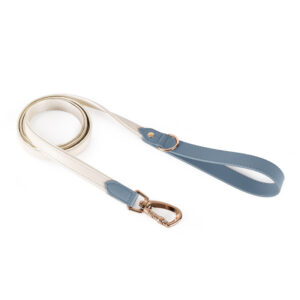
Everyone wants a piece of the $300 billion global pet market. Most new brands fail within eighteen months.
Why? They build their businesses on borrowed foundations. They rely on saturated third-party dropshipping platforms1, sell generic, unbranded inventory, and compete instantly in a race to the bottom on price.
I take a different approach. Over the last 11 years of manufacturing gear for some of the world’s most recognizable pet brands, I have seen exactly what separates flash-in-the-pan commerce sites from lucrative, scalable businesses. You cannot build a defensible moat with generic products. True brand differentiation requires owning your supply chain, negotiating directly with factories, and leveraging OEM (Original Equipment Manufacturer)2 and ODM (Original Design Manufacturer)3 capabilities.
In this guide, I will detail exactly how to bypass the middlemen, secure superior profit margins, and build a scalable inventory model that sets you up for global B2B expansion.
Discovering High-Margin Niches in the Competitive Dog Product Market
Novelty items go out of style quickly. If you want sustainable cash flow, you need to focus on high-frequency use categories4.
A dog eats daily, but they also walk daily. The wear and tear on leashes, harnesses, and collars is immense. This turns functional gear into a high-margin necessity. When you try to sell a generic imported harness, you are competing with ten thousand identical listings online. You lose leverage. You lose margin.
Instead, win on technical differentiation5. The goal is not finding a bizarre new product. The goal is taking an everyday product and engineering it better than the legacy brands.
Consider the economics of a customized OEM product versus a dropshipped alternative:
- Dropshipping Model: High cost per unit, zero brand equity, massive cross-listing competition. Margin: 15-20%.
- Direct OEM/ODM Sourcing: Lower cost per unit, proprietary design, zero identical competitors. Margin: 50-70%+.
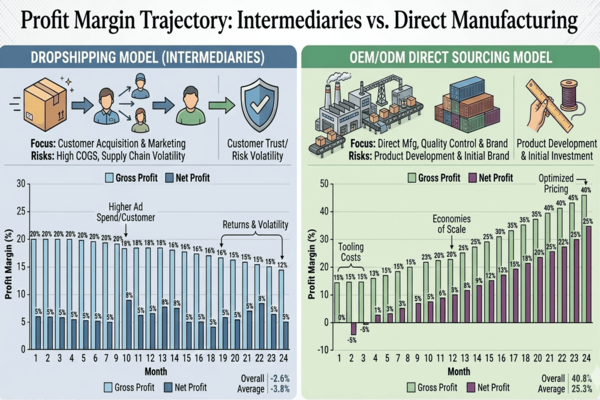
When you source high-demand items directly, and incorporate cross-industry design trends—like tactical military-grade webbing or sustainable recycled materials—you extract yourself from price wars.
Building a Resilient Supply Chain: Dropshipping vs. OEM/ODM Sourcing
Selling is easy. Fulfillment is hard. The moment you scale, a weak supply chain will fracture.
Years ago, we made a critical mistake in our own factory operations. We assumed buyers just wanted standard, off-the-shelf designs perfectly executed. We shipped a massive order of basic black nylon leashes to a European distributor. Three months later, they had barely moved any inventory. The products looked exactly like cheaper, dropshipped goods online.
I learned a brutal lesson: execution without clear differentiation punishes your buyers.
We immediately overhauled our entire process. We launched a cross-industry design research team. We moved away from being just a factory and became a strategic growth partner. We realized that our clients needed "bespoke at scale."
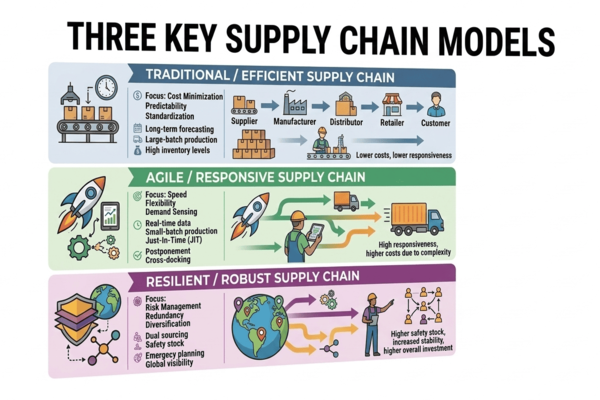
To avoid the middleman trap, you must leverage direct factory partnerships. Here is how you decide:
The Dropshipping / Print-on-Demand Trap
- Pros: Zero upfront inventory cost.
- Cons: No quality control. Slow shipping. Zero barrier to entry for competitors.
- Verdict: Avoid this if you want to build a real asset.
The OEM / ODM Direct Sourcing Model
- Pros: Total control over hardware, webbing, and branding. Access to premium finishes. Significant cost savings at scale.
- Cons: Requires cash for minimum order quantities (MOQs).
- Verdict: This is the only path for serious procurement managers and brand owners.
To bridge the MOQ gap, partner with a manufacturer that carries high-demand readymade inventory. We keep over 500 high-performance SKUs ready to ship. This means you can test the market quickly, maintain capital liquidity, and scale into heavy custom orders only when the data proves it works.
Establishing Strict Quality Control and Compliance Verification
A single snapped leash can destroy your brand overnight. In this industry, safety is not an upgrade. It is the baseline.
A mid-sized [Omnichannel Retailer] in Germany approached us on the brink of a massive recall. Their previous vendor's D-rings were snapping under the tension of large, reactive dogs. Their return rate had spiked to 14%, and customer trust was imploding.
They needed an immediate, foolproof intervention.
We audited their specs and moved them to our advanced custom dog harnesses. We replaced their cheap alloy with heavy-duty hardware featuring electrophoresis black finishes, drastically improving both tensile strength and rust resistance. Every batch underwent strict proprietary durability testing in our facility before shipping.
The result? Within four months, their defect rate plummeted to under 1%. We enforced our "Sleep Well" guarantee—meaning we took total financial responsibility for any manufacturing flaws. They stopped fielding angry customer emails and went back to focusing on revenue growth.
You must demand verifiable data from your manufacturing partners. Ask for international safety compliance certificates. Demand exact tensile strength ratings. If a vendor hesitates to share their defect rate or lacks a financially-backed after-sales policy, walk away.
Creating a Distinctive Brand Identity and E-commerce Presence
Brand identity is not your logo. It is every physical touchpoint your customer experiences.
During a walkthrough of our lamination and weaving lines last week, I stopped to observe a run of custom collars for an upcoming e-commerce brand. What made them distinct wasn't a flashy pattern. It was the micro-details. The custom laser-engraved buckles. The specialized weaving technique that felt softer against the dog's coat. The subtle pearl nickel hardware finish.
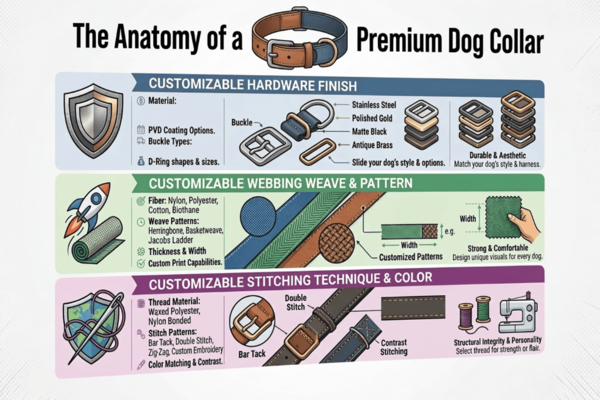
These manufacturing-level choices matter. When your product lands in a customer's hands, the physical weight and finish of the hardware do the selling for you.
Do not settle for slapping a label on a generic product. Use your factory's full capabilities. Request unique material blends. Ask about sustainable packaging options. When your physical product feels undeniably premium, your e-commerce conversion rates will naturally rise. You are no longer convincing people to buy; you are simply demonstrating undeniable value.
Implementing Effective Marketing Strategies to Drive Initial Sales
You have a differentiated product. You have a bulletproof supply chain. Now you need momentum.
Most brands burn their initial capital on broad Facebook ads. This is a mistake. Direct-to-consumer digital marketing is expensive and crowded. To secure early cash flow and position yourself for lucrative B2B wholesale opportunities, follow a more targeted approach.
Here is the 3-step launch framework I see successful clients use:
- Seed the Niche Communities: Bypass massive influencer agencies. Send your premium gear to micro-influencers6 (trainers, breeders, working dog handlers). When a professional relies on your product daily, their endorsement carries immense weight.
- Highlight the Hardware: Your marketing visuals should focus on the exact details your competitors lack. Zoom in on the reinforced stitching. Show video proof of your tensile strength testing. Educate your customer on why your gear is safer.
- Prepare for Retail Buyers: Design your packaging and pricing structures with future wholesale in mind from day one. When local pet boutiques or larger distributors ask for your catalog, you want to be ready. A reliable supplier allows you to handle an unexpected 5,000-unit retail order without panicking.
Entering the pet product space with a dropshipping mindset is planning for failure. By prioritizing direct factory negotiations, demanding rigorous quality control, and deeply customizing your products, you build a brand that lasts.
If you are a procurement manager or business owner evaluating manufacturing partners for your next product line, I would be happy to discuss how our systems can protect your margins and eliminate inventory risk. Just reach out.
Footnote:
Learn about the challenges of dropshipping and how to avoid common pitfalls. ↩
Discover how OEM can enhance your product quality and brand differentiation. ↩
Understand the benefits of ODM for creating unique products in the pet industry. ↩
Identify product categories that ensure consistent sales and customer loyalty. ↩
Explore how technical differentiation can set your products apart in a crowded market. ↩
Discover the power of micro-influencers in building brand credibility and reach. ↩