Tired of dog collar returns eating into your profits? Inaccurate sizing frustrates customers and hurts your bottom line, damaging the brand trust you've worked hard to build.
To protect your profits, master dog collar sizing. This means using a standard measuring method1, understanding how different collar types fit, and ensuring your packaging clearly communicates the adjustable range—not the total length—to prevent costly customer errors and returns.
I've seen firsthand how a seemingly small issue like sizing can become a massive financial drain for a pet product distributor. A single return isn't just the cost of the collar; it's shipping, restocking, and customer service time. More importantly, it's a crack in your customer's trust. They blame you, the retailer, not just the manufacturer. As your partner, my job is to help you eliminate these preventable losses. Let’s go through the exact steps to ensure every collar you sell is the right fit, turning a point of friction into a pillar of your brand's reliability.
How do you get a truly accurate neck measurement?
Customers guessing their dog's size is the number one cause of returns. Providing a simple, foolproof guide is the first line of defense. I'll show you exactly how.
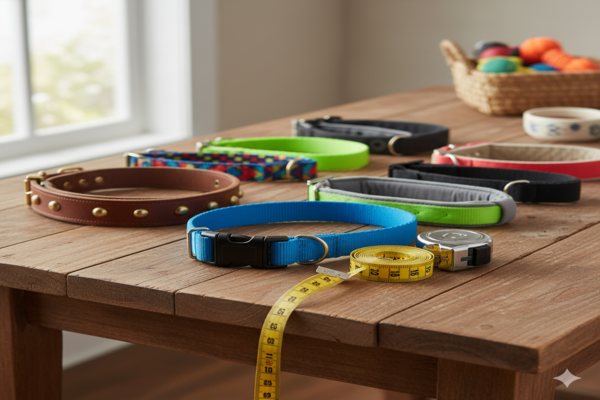
To measure a dog's neck accurately, use a soft measuring tape. Place it around the thickest part of the neck, where the collar naturally sits. You must be able to fit two fingers comfortably between the tape and the neck to ensure a safe, snug fit.

The Importance of the "Two-Finger Rule"
The "two-finger rule" is the gold standard for a reason. It's a simple, universal method that prevents the two most common fitting problems: a collar that's too tight and risks choking, or one that's too loose and can slip off. When we work with partners like Alex, we advise them to build this instruction into their product listings and packaging. If a customer doesn't have a soft tape, they can use a piece of string or a phone charger cable, wrap it around the neck, mark the length, and then measure the string with a rigid ruler. This simple step empowers the customer to make the right choice the first time. It's not just about selling a collar; it's about providing the expertise that builds trust and loyalty, drastically cutting down on sizing-related complaints and returns for your business.
| Fit Problem | The Risk | The Solution |
|---|---|---|
| Too Tight | Choking hazard, skin irritation, discomfort | The two-finger rule2 ensures breathing room |
| Too Loose | Dog can slip out, creating a safety hazard | Ensures the collar is snug enough to stay on |
How does sizing differ between standard, martingale, & training collars?
Using one generic sizing guide for all collar types is a recipe for disaster. A medium in a standard collar is not the same as a medium in a martingale. I'll explain the key differences.
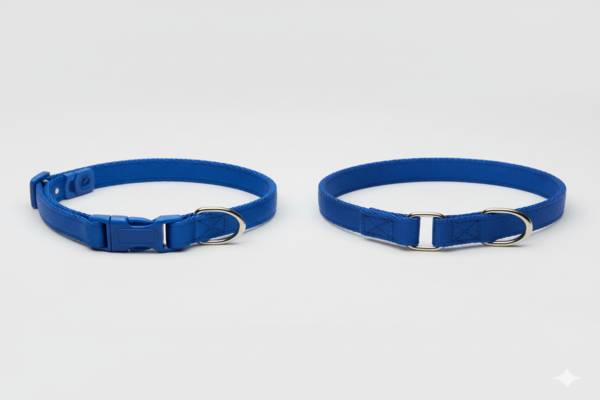
For a standard buckle collar, use the two-finger neck measurement. For a martingale, you must also measure the widest part of the dog's head. The collar must be large enough to slip over the head, but the tightened loop must be smaller than the neck.
Understanding the Nuances of Fit
Each collar style is engineered differently, and the sizing must reflect that. A standard side-release collar is straightforward, but a martingale is more complex. Martingales are designed for dogs with narrow heads, like greyhounds, to prevent them from backing out of their collar. To size it, you need two measurements: the neck (like usual) and the circumference of the head at its widest point (including the ears). The collar, when fully loosened, must slide over the head measurement. When tightened by a leash pull, it should become snug around the neck without choking. As a manufacturer, we ensure our martingale size charts clearly show both the loosened and tightened range. Educating your customers on these differences positions you as an expert and prevents frustration for both the pet and the owner.
| Collar Type | Primary Measurement | Secondary Measurement | Key Fitting Point |
|---|---|---|---|
| Standard (Buckle) | Neck circumference | N/A | Two fingers of space under the collar |
| Martingale | Neck circumference | Widest part of the head | Must slip over the head, but tighten snugly on the neck |
Is using an old collar a reliable shortcut for sizing?
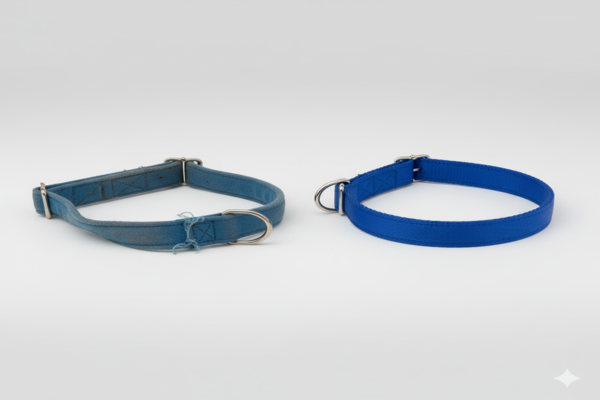
Customers often grab an old collar to decide on a size, thinking it's a foolproof method. This common shortcut is surprisingly risky and a frequent cause of incorrect purchases.
Using an old collar is an unreliable shortcut. Different brands have different sizing standards, and an old collar can stretch over time. It's always best to measure the dog's neck directly. The old collar's total length is especially misleading and should not be used.
Why This Shortcut Backfires
I’ve analyzed thousands of returns, and this is a classic mistake. A customer lays their dog's old, worn-out collar flat and measures it from end to end. Let's say it measures 18 inches. They then buy a new collar labeled "18 inches" or "Medium (16-20 inches)" and are shocked when it doesn't fit. Why? First, the old collar has likely stretched. Second, and more importantly, the end-to-end measurement of a collar is not its functional circumference. Buckle overlap, the thickness of the material, and different hardware designs all change how a collar actually fits. As a B2B partner, your defense against this is clear communication. Your product descriptions and sizing guides should explicitly state: "Do not measure your old collar. Please measure your dog's neck for an accurate fit." This simple sentence can save you countless returns.
How should you read sizing charts to prevent mismatches?
A sizing chart is useless if it's confusing or misleading. Many brands make critical errors in how they present sizing, leading directly to customer mistakes. I'll show you the right way.
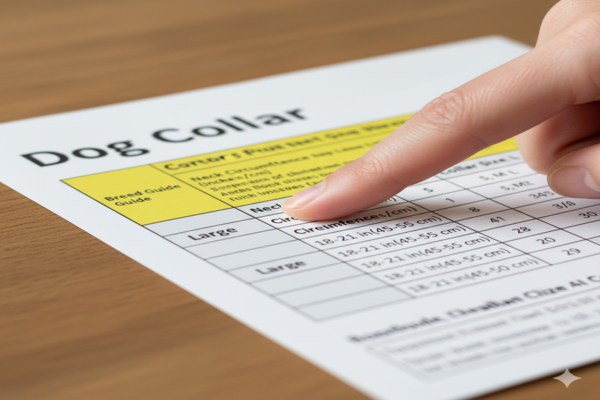
To prevent mismatches, focus on the adjustable range, not the total length. For a pin-buckle collar, this is the distance from the pin to the first and last holes. For a side-release collar, it's the inside circumference when fully tightened and loosened.
The Critical Difference Between Total Length and Adjustable Range
This is an insight that has saved my partners thousands of dollars. Many manufacturers list the total material length of a collar on their packaging. This is useless information for the end consumer. A dog owner needs to know if the collar will fit their dog's 15-inch neck. The crucial data is the adjustable range. For a pin-buckle collar, you must measure from the metal pin to the first hole, and from the pin to the last hole. That is the true fit range. For a side-release buckle collar, you must measure the closed, inside circumference at its smallest and largest settings. I am insistent that our packaging at Boonpets clearly states "Fits Necks: 14-18 inches," not "Total Length: 22 inches." This clarity is a non-negotiable part of protecting your profit margin.
| Sizing Mistake | Result | The Correct Way |
|---|---|---|
| Listing Total Length | Customer confusion, wrong size purchased | List the adjustable range (e.g., Fits 14"-18") |
| Measuring Open Buckle | Inaccurate circumference, collar is too small | Measure the closed circumference of the collar |
What is the true business impact of sizing errors3 on your bottom line?
Sizing errors aren't just an operational headache; they are a direct attack on your profitability. The costs are much higher than you might think. I'll break down the real numbers.
Sizing errors directly impact your bottom line through the costs of return shipping, labor for processing returns, and lost inventory. They also generate negative reviews, which deter new customers and damage your brand's long-term value and profitability.

The Hidden Costs That Erode Profit
Every time a customer returns a collar due to poor fit, your business loses money in several ways. It’s not just the refund. You often have to pay for return shipping. Your warehouse staff has to spend time receiving, inspecting, and restocking the item—if it's even in a condition to be resold. If it's not, that's a total loss. So a single $15 collar return can easily cost you $5-10 in direct expenses. Now, multiply that by hundreds of returns a year. The numbers become significant. But the biggest cost is invisible: brand damage. A frustrated customer is more likely to leave a negative review. That one-star review warning "Sizing is all wrong!" can scare away dozens of future customers. Getting sizing right is one of the highest-leverage activities for protecting your margin and your reputation.
How does partnering for success reduce returns through smart sizing and packaging?
You shouldn't have to solve the sizing problem alone. A good manufacturing partner should be your first line of defense, proactively helping you eliminate returns before they ever happen.
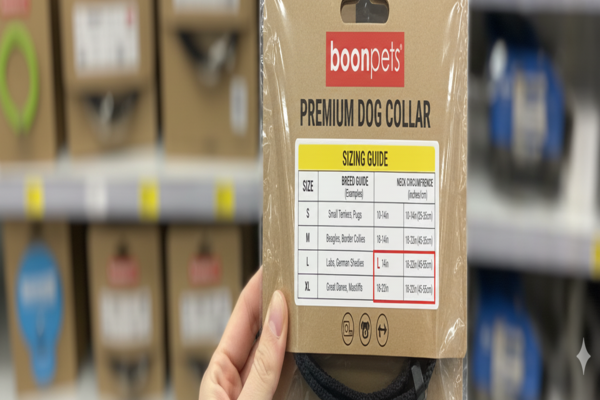
A strategic partner reduces returns by manufacturing to precise sizing specs and creating smart packaging. This includes clear, graphical sizing guides on the label and using terms like "Adjustable Range" instead of "Total Length" to give the customer complete confidence in their purchase.
Building Your Defense System with Your Supplier
This is where a true partnership shines. At Boonpets, we see ourselves as part of your team. We actively work to eliminate sizing issues at the source. It starts with manufacturing consistency. Our QC process uses physical jigs to ensure that a "Medium" collar made today has the exact same adjustable range as one made six months from now. Beyond that, we collaborate on packaging design. We can help you create packaging that features a simple, visual guide on how to measure a dog's neck. We print the adjustable range in large, clear font. We eliminate confusing terms. This proactive approach turns your product packaging from a simple box into a powerful tool for customer education and profit protection. Your success is our success, and preventing returns is one of the most direct ways we can help you grow.
Conclusion
Mastering dog collar sizing and communicating it clearly on your packaging is a direct strategy to reduce returns, protect your profits, and build lasting customer trust in your brand.
Footnote: