You're stocking training collars, but wonder if they're hurting your brand. Carrying controversial items like choke collars1 can alienate modern customers and lead to returns. Let's explore the better alternatives.
No, choke collars are not good for training dogs. Most modern, certified trainers2 and veterinarians advise against them due to the risk of physical injury and psychological harm. Effective training relies on positive reinforcement, and superior, humane tools like front-clip harnesses offer better results without pain.

As a manufacturer, I'm not just concerned with making products. I'm focused on creating products that solve problems for pets and build trust for your brand. For over a decade, I've seen the pet industry evolve. The conversation around training tools has shifted dramatically. What was once common on store shelves is now seen as outdated and even cruel by a growing number of pet owners. Sticking with old products isn't just a missed opportunity; it's a risk to your reputation. Let's break down the reality of choke collars and why your business should move towards more innovative, humane, and profitable solutions.
Do dog trainers actually recommend choke collars anymore?
You see choke collars in some stores and assume they are still professionally endorsed. This assumption can align your brand with outdated, harmful methods, turning off educated customers. I'll clarify the modern professional stance.
The overwhelming majority of certified professional dog trainers and veterinary behaviorists do not recommend choke collars. Major training organizations now strongly advocate for positive reinforcement. They view choke collars as aversive tools that can cause significant physical and psychological harm, damaging the dog-owner bond.

The Shift Away from Aversive Tools
The world of dog training has undergone a massive change. Decades ago, training was often based on dominance and correction. The choke collar was a key tool in that philosophy. The idea was to give a sharp "correction" or pop on the leash to stop an unwanted behavior. However, modern animal behavior science3 has shown us a better way. We now understand that dogs learn best through positive reinforcement—rewarding good behavior instead of punishing bad behavior. Organizations like the Certification Council for Professional Dog Trainers (CCPDT) and the American Veterinary Society of Animal Behavior (AVSAB) have published position statements against the use of aversive tools like choke chains. They state that these tools can cause injuries to the trachea, esophagus, and neck, and can increase fear, anxiety, and aggression. Stocking them sends a message that your brand is behind the times.
| Training Philosophy | Key Principle | Tools Used | Business Implication |
|---|---|---|---|
| Old School (Dominance) | Punish bad behavior | Choke chains, prong collars | Shrinking market, brand risk |
| Modern (Positive Reinforcement) | Reward good behavior | Clickers, treats, front-clip harnesses | Growing market, builds trust |
What type of collar is best for dog training?
With choke collars off the table, you need to know what to recommend to customers. Offering the wrong alternatives can still lead to poor results and dissatisfaction. I will show you the best modern options.
The best "collar" for training a dog not to pull is often a harness. Specifically, a well-designed front-clip harness is highly effective and humane. It works by redirecting the dog's forward momentum sideways, discouraging pulling without causing pain or choking.

Understanding Modern Training Equipment
Your customers look to you for expert advice. When they ask for a training solution, offering a front-clip harness positions you as a knowledgeable and humane retailer. These harnesses have a leash attachment point on the dog's chest. When the dog pulls, the leash gently turns them back towards the owner, making pulling ineffective and teaching them to walk politely. Unlike collars, they don't put any pressure on the dog's throat. For general use, a simple back-clip harness is great for dogs that don't pull. And a standard flat collar? Its most important job is to hold identification tags. When my team designs harnesses, we focus on things like multiple adjustment points for a perfect fit, padded straps for comfort, and durable hardware. These are the features that solve the customer's problem and lead to positive reviews, not pain.
| Training Tool | How It Works | Best For | Safety Note |
|---|---|---|---|
| Front-Clip Harness | Redirects forward motion | Dogs that pull on leash | Very safe, no pressure on throat |
| Back-Clip Harness | Leash attaches on the back | Trained dogs, casual walks | Safe, but can encourage pulling in some dogs |
| Head Halter | Gently guides the head | Strong pullers, large dogs | Requires careful fitting and introduction |
| Flat Collar | Holds ID tags | Basic identification | Not recommended for training pullers |
But will a choke collar actually stop pulling?
The main selling point of a choke collar is that it stops pulling. But relying on this can create new, worse problems for the dog and its owner. I will explain why this is a risky, short-term fix.
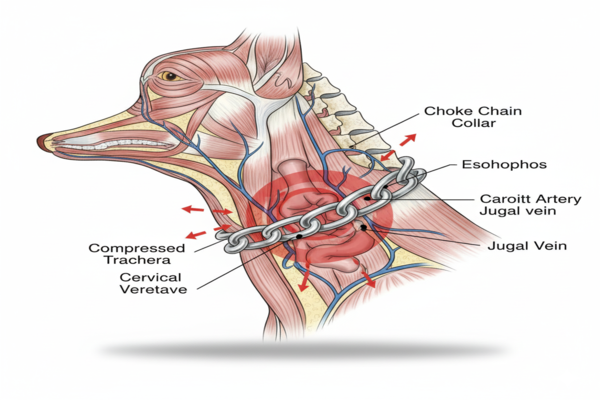
A choke collar can stop pulling temporarily by causing pain or the sensation of suffocation when the dog pulls. However, many dogs learn to ignore the pain and continue pulling, risking serious injury. It doesn't teach the dog what to do instead.
Why Punishment is a Flawed Strategy
Imagine trying to learn a new skill while someone yells at you every time you make a mistake. You wouldn't learn very effectively, and you'd probably end up feeling anxious and stressed. This is what a choke collar does to a dog. It uses punishment to stop a behavior. The dog pulls, the chain tightens, it hurts, so they stop. The problem is, this doesn't teach the dog how to walk nicely on a leash. It just teaches them to fear the moment the chain tightens. Many dogs become "collar-wise," behaving only when the choke collar is on. Worse, some dogs associate the pain with whatever they are pulling towards, like another dog or a person. This can create fear and aggression. A front-clip harness, by contrast, simply makes pulling an unproductive action. There is no pain, no fear—just a simple, physical redirection that helps the dog learn.
| Method | Dog's Experience | Long-Term Outcome |
|---|---|---|
| Choke Collar (Punishment) | Pain, fear, anxiety when pulling | May create aggression, fear, or chronic pulling with injury |
| No-Pull Harness (Redirection) | Gentle turn, makes pulling ineffective | Learns to walk with a loose leash, builds confidence |
Beyond product flaws, what is the true business cost of choke collars?
You might think selling one more product SKU is always good. But carrying choke collars comes with hidden costs that affect your bottom line. I'll lay out the business risks for you.
The true business cost of selling choke collars includes a tarnished brand reputation, higher product returns, and liability risks4. Catering to a shrinking market of old-school trainers means you are actively ignoring the larger, growing customer base that demands humane products.
Calculating the Risk to Your Brand
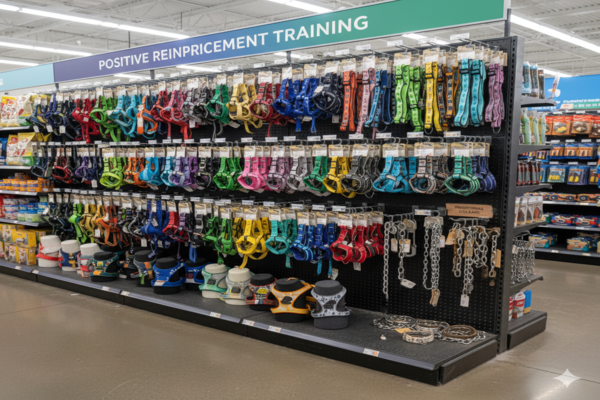
As a procurement manager like Alex, your job is to build profitable product categories. Selling choke collars directly undermines that goal. First, there's your brand image. Modern consumers, especially millennials and Gen Z who make up a huge portion of pet owners, are incredibly savvy. They research products and align their spending with their values. Stocking tools widely seen as inhumane positions your brand as outdated and uncaring. This leads to negative social media comments and lost sales. Second, there are the returns. A customer who buys a choke collar and finds it hurts their dog or simply doesn't work will return it. Worse, they might leave a one-star review warning others. Finally, there's the liability. While rare, products that cause injury can lead to serious legal and financial consequences. The small profit margin from a choke chain is not worth the risk to your entire brand's reputation and financial health.
Why is the market shift to positive reinforcement a commercial imperative?
Seeing this as just a "trend" is a mistake. The move towards positive reinforcement is a fundamental market shift. Ignoring it means getting left behind. I'll explain why this is a commercial necessity.
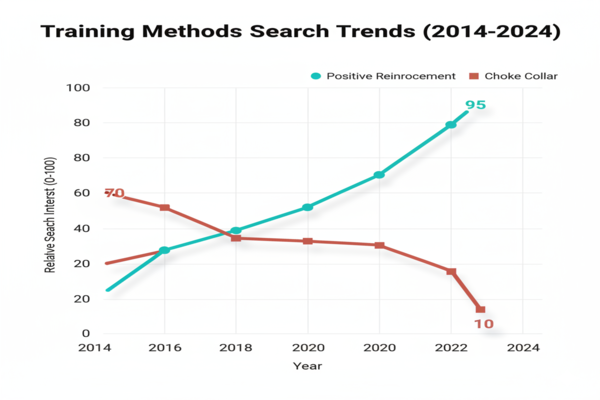
The shift to positive reinforcement is a commercial imperative because the modern pet owner is more educated and emotionally invested than ever. They see their pets as family and demand products that reflect that. This market actively seeks out and pays more for humane, effective solutions.
Following the Money: Meet the Modern Pet Parent
Your most valuable customer is the "pet parent." This demographic spends more, is more loyal, and is more influential than any other. I've built my business by understanding them. They don't want a tool to "correct" their dog; they want a product that enhances their relationship with their pet. This is not a niche market. It is the market. Data shows that spending on premium pet products, including well-designed harnesses, leashes, and accessories, is growing year over year. The money is flowing towards brands that demonstrate empathy, innovation, and quality. By stocking humane training tools, you are not just making an ethical choice; you are making the smartest commercial choice. You are aligning your business with the direction the entire industry is heading. Catering to this customer builds long-term loyalty and makes you a destination for premium pet gear.
How can partnering for profit mean innovating beyond traditional training tools?
Your supplier shouldn't just ship boxes. They should help you capitalize on market shifts. A true partner helps you innovate and lead the market. I'll show you what that partnership looks like.
A true manufacturing partner helps you move beyond outdated products by co-creating innovative solutions. This means developing exclusive designs for no-pull harnesses, creating custom colors and patterns, and offering a range of humane tools that make your brand a market leader.

Building a Profitable and Humane Product Line
At Boonpets, my goal is to help my partners succeed. When a partner like Alex comes to us, we don't just show them a catalog. We discuss the market. We talk about the problems their customers are facing. Instead of offering a generic choke collar, we can develop a proprietary front-clip harness exclusively for their brand. We can test different materials for comfort and durability. We can create unique patterns that can't be found on Amazon. We can build an entire "Polite Walking" collection that includes the harness, a matching leash, and even a travel treat bag for positive reinforcement on the go. This is how you win. You don't compete on price for a cheap, outdated tool. You create a unique, high-value solution that solves a real problem for the modern pet owner. This approach turns a simple product category into a powerful brand statement and a significant profit center.
Conclusion
Switching from choke collars to humane alternatives like harnesses isn't just an ethical choice. It's a smart business strategy that builds brand trust, meets modern market demands, and drives profitability.
Footnote:
Explore the risks associated with choke collars and why they are discouraged by modern trainers. ↩
Find out the best practices recommended by certified trainers for effective dog training. ↩
Discover insights from animal behavior science that can improve your dog training methods. ↩
Understand the potential legal and financial risks associated with selling choke collars. ↩