Frustrated by long lead times1 derailing your launches? Unexpected delays when ordering custom collars in bulk force you into expensive air freight or missed sales seasons. You can take back control.
To reduce lead times, simplify your designs using stock components, plan for a 6+ month timeline, and partner with a transparent manufacturer. This strategy avoids custom-part delays and ensures your bulk custom dog collars arrive on schedule without costly shortcuts.
I've watched too many promising partnerships get strained by the stress of timelines. As a procurement manager, you have a launch date to hit, and nothing is more frustrating than seeing it slip away due to production delays you can't control. After 11 years of manufacturing pet gear, I can tell you that the secret isn't about rushing production; it's about making smart decisions before production even begins. Let's break down exactly where the delays hide and how you can proactively eliminate them when ordering custom collars in bulk.
What slows down the production of custom bulk dog collars?
You've approved a final design, but weeks go by with little progress. These unexplained delays are maddening. The problem is often buried in a complex supply chain you can't see.
The biggest factor slowing down your order is waiting for custom-made components. If your design requires special hardware or unique materials2, each part must be sourced from other factories, creating new bottlenecks and extending the timeline for producing custom dog collars at scale.
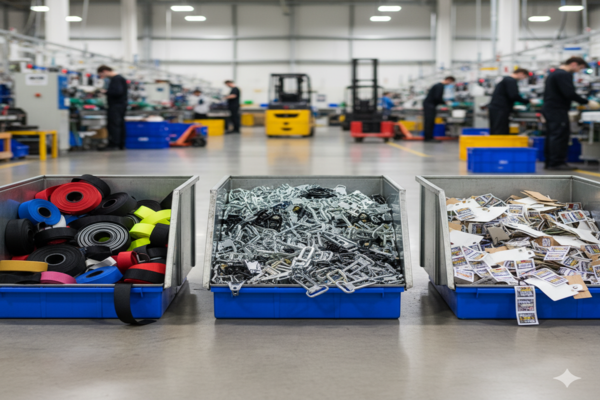
When I create a production schedule, it’s not just about the time it takes for my team to cut and sew. The clock starts the moment we need to source the materials. For instance, if your order requires a unique buckle design that we don't stock, the process looks like this:
- Mold Creation: We commission a new mold from our hardware supplier. (2-3 weeks)
- Sample Production: They produce a sample buckle from the new mold. (1 week)
- Approval: We ship the sample to you for approval. (1-2 weeks)
- Mass Production: After approval, the supplier produces your full order of buckles. (2-4 weeks)
Just one custom component can add over two months to your lead time before we even begin assembling the final collar. When a design meant for a large production run includes custom webbing, custom padding, and a custom buckle, these lead times stack up, causing major delays.
How can simplifying designs speed up bulk orders of custom collars?
You have a unique vision, but the lead time feels impossible. It seems you must sacrifice either creativity or speed. The solution isn't sacrifice; it’s strategic simplification.
You can get products to market faster by using your supplier's in-stock components. Focus customization on high-impact details like branded labels or unique packaging. This delivers a unique product without the long delays from sourcing custom parts from scratch.

Over my years at Boonpets, I've helped countless partners create standout products without starting from scratch. The smartest way to get bulk orders of custom collars out to market quickly is to customize the elements that are easiest to change. Instead of ordering a completely new webbing color with a 6-week lead time, why not use one of our 50+ in-stock webbing colors and add a distinctive, custom-designed logo?
Here is a comparison of two approaches for your next volume order:
| Customization Strategy | Impact on Timeline | Result |
|---|---|---|
| Deep Customization: Custom webbing color, new buckle mold. | Adds 6-10+ weeks for material sourcing. | A highly unique but slow-to-market product. |
| Smart Simplification: Stock webbing color, custom woven label, branded buckle. | Adds 1-2 weeks for label production. | A distinct, branded product delivered much faster. |
This "smart simplification" approach focuses your investment on the details customers notice most—like your brand logo—while leveraging our efficient supply chain. You get a product that looks and feels custom, but on a much shorter timeline.
Why is advanced planning essential when sourcing custom dog collars in large quantities?
You think a three-month timeline is safe for an overseas order. But then shipping delays and customs hold-ups appear. Suddenly, you're missing your launch window and scrambling.
Advanced planning is vital because the total timeline is much longer than just production. You must account for product development (1-2 months), manufacturing (1-2 months), and shipping (1-2 months). An overseas order can easily take half a year from concept to delivery.
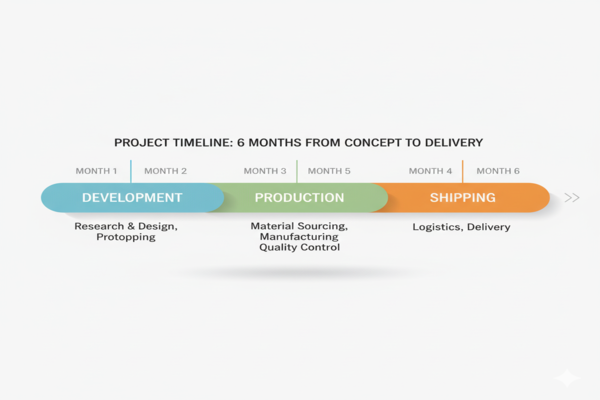
I see buyers make this mistake all the time when sourcing custom dog collars in large quantities: they underestimate the complete timeline. They hear "45-day production lead time" and think they will have the product in two months. The reality is far more complex.
Let's map out a realistic schedule for a semi-custom dog collar order:
-
Phase 1: Development & Sampling (4-8 weeks)
- Initial design discussions and quotes.
- Creating and shipping physical samples for your approval.
- Revisions and final sample approval.
-
Phase 2: Production (6-8 weeks)
- Ordering raw materials (assuming stock components).
- Manufacturing: cutting, sewing, assembly, quality control3.
- Packaging.
-
Phase 3: Shipping & Logistics (4-8 weeks)
- Booking ocean freight.
- Inland transport to the port.
- Ocean transit time.
- Customs clearance at the destination port.
- Inland transport to your warehouse.
As you can see, a "quick" project can easily stretch to six months. Planning for this full duration is the only way to ensure your product arrives when you need it.
How can you avoid expensive air shipping for your order?
Your product is finally ready, but it's weeks behind schedule. Now your only option is air freight, which destroys your profit margin. This is a painful and entirely avoidable situation.
The best way to avoid air shipping your custom bulk dog collars is through meticulous upfront planning. By building buffer time into your project timeline—for potential production delays, shipping congestion, or customs inspections—you can absorb unexpected issues without missing your deadline. Always add at least three to four extra weeks.

Air shipping should be a last resort. It can cost 5 to 10 times more than ocean freight, turning a profitable product line into a losing one. I always advise my partners to treat their launch date as a fixed point and work backward, adding generous buffers.
For example, if you need inventory for the holiday season in November, you shouldn't be placing your order in August. A smart plan would look like this:
- Target Delivery: Early November.
- Shipping Buffer: Account for potential port congestion. Ship no later than early September. (8 weeks for shipping + buffer).
- Production Buffer: Account for minor factory delays. Production must be finished by the end of August. (8 weeks for production + buffer).
- Development & Approval: All samples must be approved by the end of June.
This approach gives you a 16-week buffer between your final approval and your needed delivery date. If a customs inspection adds two weeks, your timeline can absorb it. You stay profitable, and I maintain a happy partner.
Which supplier practices prevent delays on volume orders?
You've planned perfectly, but your supplier is disorganized and communicates poorly. Their mistakes cause delays that you end up paying for. A good plan requires an equally good partner.
A reliable supplier prevents delays with proactive communication, strong project management, and transparent quality control. They should confirm every detail upfront, provide regular updates without being asked, and have established relationships with their own raw material suppliers to anticipate bottlenecks.

Your manufacturer is your project manager overseas. At Boonpets, we've built our reputation on being that reliable partner for clients. Here are the practices I insist on to keep our projects on track:
- Detailed Order Confirmation: Before we begin, we create a comprehensive order sheet that specifies every detail—materials, colors, hardware, and packaging. You approve this to ensure there are no misunderstandings.
- Proactive Updates: You shouldn't have to chase us for information. We provide updates at key milestones: when raw materials arrive, when production begins, and when final quality control is complete.
- Strong Supply Chain Relationships: We have worked with our webbing and hardware suppliers for years. We know their lead times and trust their quality. This allows us to create realistic timelines for you from the start.
- In-house Quality Control: Our own internal QC team checks the product at every stage. This catches small problems before they become big ones that could cause delays or require rework.
A supplier who does these things isn’t just a vendor; they are an extension of your team.
Conclusion
Reduce lead times on your next big order by simplifying designs, planning a six-month cycle, and choosing a proactive supplier. This ensures on-time delivery without sacrificing profit or quality.
Footnote: