Your shelves are stocked with fantastic products, but sales are flat. Poor displays make your store look cluttered and cheap, confusing customers and killing your revenue potential.
Properly display pet accessories by creating a logical store flow, organizing products by category and brand, and using clean, well-lit fixtures. Ensure each item is easy to see, touch, and compare.
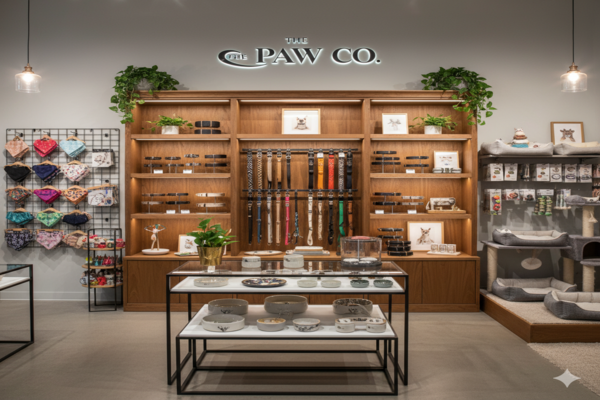
Over the years, I’ve visited hundreds of retail stores that carry our products. The difference between a store that moves inventory and one that doesn't often comes down to one thing: presentation1. It's not just about having the right products; it's about helping the customer see them. We even design our packaging with this in mind. Let’s break down the simple, effective strategies that turn a cluttered aisle into a sales machine.
What are some general considerations for the layout of the pet store?
Customers walk into your store and look lost. An illogical layout2 creates confusion and frustration, causing them to leave without buying anything, even if you have exactly what they need.
The best layouts guide customers on a clear path through the store. Create distinct "zones" for dogs and cats, and place essential items like food at the back to encourage browsing.
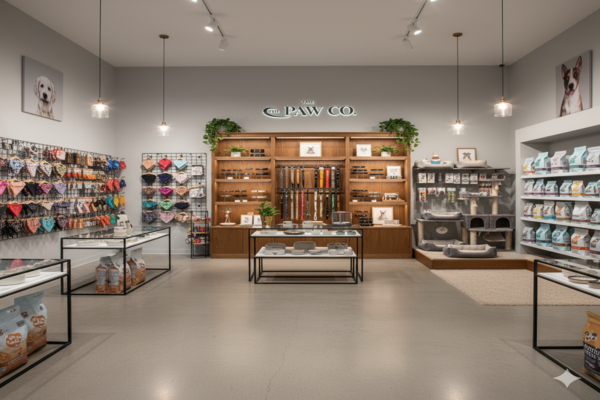
I work with retailers of all sizes, from small boutiques to large chains. The most successful ones all understand customer flow. They don't just put products on shelves; they create an intentional journey. Think of your store's entrance as a "decompression zone" where shoppers can adjust. Don't bombard them with products right away. Give them a moment to get their bearings, then guide them into the main shopping area where they can easily navigate to the sections they need.
Building a Path to Purchase
A strategic layout does more than just organize your store; it actively boosts sales. Here are the core principles to implement:
- Create a Clear Flow: Most retail experts3 recommend a circular path, often called a "racetrack," that leads customers from the entrance around the store and to the checkout. This exposes them to the maximum number of products without feeling overwhelming.
- Establish Destination Zones: Place high-demand, staple items like pet food at the back of the store. This forces customers to walk past other categories, like accessories and toys, increasing the chance of an unplanned purchase.
- Separate by Pet Type: Create obvious sections for dogs, cats, and other pets. A customer looking for a cat collar shouldn't have to search through an entire aisle of dog harnesses. Clear signage4 is essential here.
This foundational layout sets the stage for everything else. It makes the shopping experience intuitive and enjoyable, which is the first step toward a sale.
How do you organize and display products to attract customers?
Your accessory aisle is a chaotic mix of colors and brands. Customers can't find what they are looking for, so they give up and walk away, or worse, buy the cheapest option.
Organize accessories first by category (collars, leashes), then by brand. A clean, uniform display with neatly hung products on cards that aren't too big makes your entire section look more professional and appealing.
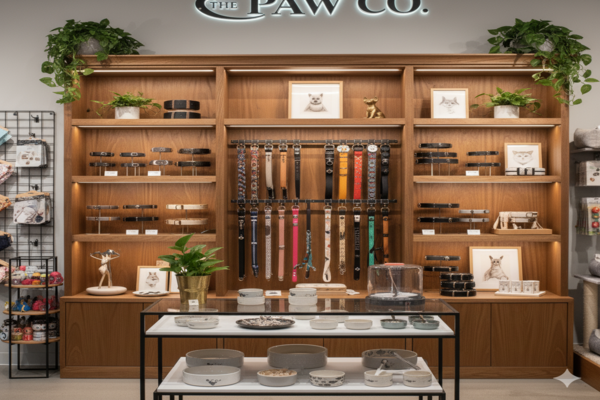
This is where my experience as a manufacturer becomes really important for my partners. We spend a lot of time thinking about the packaging. We use cardboard hangers that are sturdy but not oversized. Why? Because shelf space is money. If a hanger card is too big, you can display fewer items in the same space. We also ensure our products are fixed securely to the card so they hang straight and look uniform. A neat display instills confidence in the product's quality before the customer even touches it.
From Chaos to Clarity
A well-organized display helps customers compare products and make confident buying decisions. Use this three-step hierarchy for your accessory walls:
- Group by Category: This is the most basic rule. Put all collars in one section, all harnesses in another, and all leashes together. This is how customers shop.
- Block by Brand: Within each category, group all the products from a single brand together. This helps build brand recognition and makes it easy for loyal customers to find their favorite products.
- Arrange by Color/Style: Finally, arrange the products within each brand block in a visually pleasing way. A gradient of colors (a "color story") is highly effective and draws the eye.
This systematic approach makes your displays easy to navigate, look more professional, and ultimately helps drive sales by making the customer's choice simpler.
Why is visibility crucial for leash and harness displays?
Your best leashes and harnesses are hidden in the back or hung too low. If customers can't easily see and touch the products, they won't buy them, especially higher-margin premium items.
Visibility is everything. Leashes and harnesses must be hung at eye level and given enough space to be seen clearly. This allows customers to inspect the quality, feel the material, and appreciate the design details.
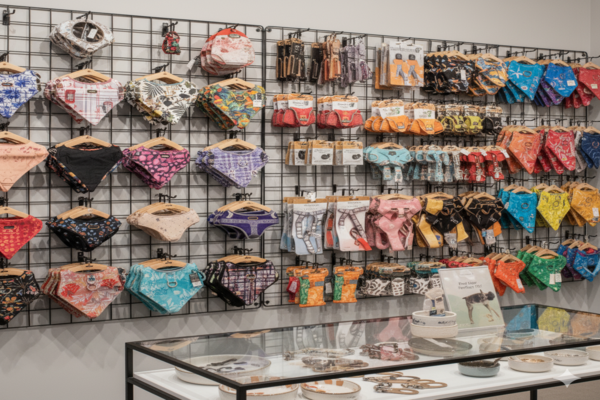
I once walked into a partner's store and saw our premium line of no-pull harnesses hung on a bottom rack, almost touching the floor. Sales were slow. We moved the exact same products to a well-lit wall at eye level and created a simple sign explaining the benefits. Sales for that line tripled in one month. It wasn't a product problem; it was a visibility problem. Customers need to see the value, and they can't do that if the product is hiding.
Making Your Products the Hero
Your display fixtures and lighting should work together to highlight the products themselves.
- The "Eye-Level is Buy-Level" Rule: This retail mantra is absolutely true. Your best-selling and highest-margin products should be placed between your customers' waist and eye level. This is the most valuable real estate in your store.
- Don't Overcrowd: Give each product room to breathe. Jamming too many items onto one peg makes the display look messy and cheap. It also prevents customers from easily removing an item to inspect it.
- Use Good Lighting: A well-lit display makes colors pop and highlights the quality of the materials and hardware. Spotlights focused on your premium accessory wall can draw attention from across the store and signal that this is a high-value area.
Investing in good placement and lighting is one of the highest-return activities you can do to boost accessory sales.
What factors influence impulse purchases5 of pet products?
Your customers come in for a bag of dog food and leave with just that. You are missing out on a huge source of revenue by not encouraging smaller, spontaneous purchases.
Impulse purchases are driven by strategic product placement, especially at the checkout counter. Low-cost, high-appeal items like toys, treats, and seasonal accessories displayed near the register are incredibly effective.
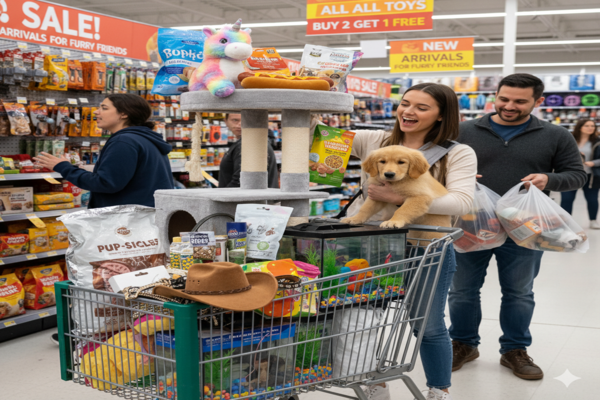
Every time I work with a new distributor, I talk to them about the "checkout zone." It's the last chance you have to increase the transaction value. We've developed specific, smaller-footprint displays for our partners designed exclusively for this area. Placing a bin of colorful, durable chew toys or a rack of festive holiday-themed collars right where customers are waiting to pay is a simple but powerful way to add an extra $5 or $10 to almost every sale.
Engineering the Impulse Buy
You can't leave these profitable, last-minute sales to chance. You have to plan for them.
- Location is Key: The area within a few feet of your cash register is prime impulse-buy territory. Customers are already in a buying mindset and are often waiting in line with nothing else to do.
- Price Point Matters: The best impulse items are relatively inexpensive. Customers are more likely to add a low-cost item to their cart without much thought.
- Create a "Need": Use signage to create urgency or suggest a need. A sign that says "Don't Forget a Treat for Your Good Boy!" or "Our Most Durable Chew Toy" can be the final nudge a customer needs.
Here's a quick guide on what works where:
| Location | Best Product Types | Why It Works |
|---|---|---|
| Checkout Counter | Toys, Treats, Seasonal Items | Captures attention during wait times. |
| Endcaps | New Arrivals, Sale Items | High-traffic areas that signal promotions. |
| Near Related Products | Leashes next to collars | Suggests a complementary need (cross-selling). |
By strategically placing these items, you make it easy for customers to treat their pets, and in doing so, you significantly boost your store's profitability.
Conclusion
Properly displaying accessories through a logical layout, organized sections, and high visibility is not just about looks. It is a core business strategy that directly increases sales and customer satisfaction.
Footnote:
Learn how effective presentation can significantly influence customer purchasing decisions. ↩
Discover how a logical layout can improve customer navigation and increase sales. ↩
Gain insights from retail experts on effective store layout and design strategies. ↩
Explore how effective signage can guide customers and enhance their shopping experience. ↩
Understanding impulse purchases can help you increase sales through strategic placement. ↩