Your warehouse is full, but your best-sellers are gone. You're drowning in slow-moving dog collar inventory, tying up cash and killing your profits with every SKU you can't sell.
Avoid overstocking1 by ordering quantities based on sales velocity, not equality. Prioritize smaller sizes and core colors (like black, red, and blue) over larger sizes and fashion colors. This weighted ordering strategy, informed by your sales data2, is the key to a balanced inventory.
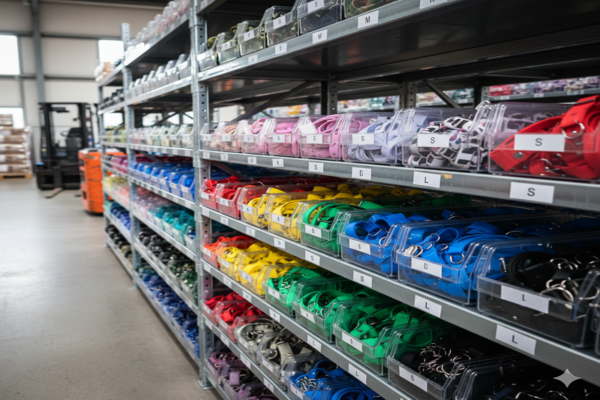
I remember a partner who was so proud of his "full range." He had every color and size of a new collar style in stock, all in equal numbers. Six months later, he was calling me, desperate to offload a mountain of a particular color, extra-large collars. He learned a hard lesson that day: stocking wide is not the same as stocking smart. The secret isn't about having everything; it's about having the right things in the right quantities. Let's dig into how you can get this right from your very first order.
What are the key inventory planning3 strategies for dog collars?
You treat all your products the same when ordering. This one-size-fits-all approach leaves you with a messy, inefficient inventory that costs you money every single day.
The key strategy is to treat collars like apparel, not commodities. This means acknowledging that one collar style creates dozens of individual SKUs (Stock Keeping Units) based on color and size. Your planning must reflect this complexity by allocating budget and quantity unequally across these SKUs.
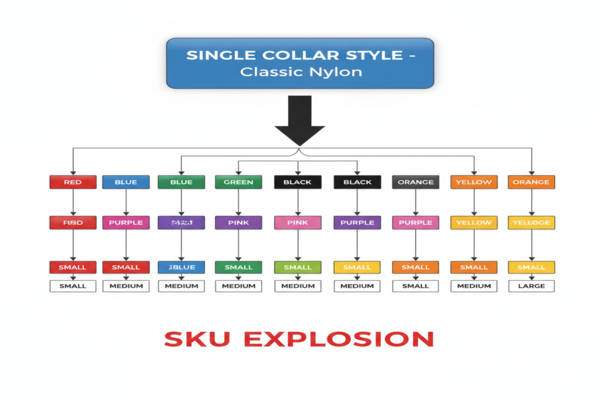
The biggest mistake I see is thinking "dog collar" is a single item. It's not. I had a client introduce one new harness style. He thought he was adding one product. But with 5 colors and 4 sizes, he actually added 20 new SKUs to his system. If he ordered 100 of each, he's instantly sitting on 2,000 units for just one new style. That's a huge investment and a massive risk.
The SKU Explosion Effect
The math is simple but powerful. A single collar style expands rapidly:
- 1 Collar Style
- Multiplied by 4-5 Colors
- Multiplied by 4 Sizes (S, M, L, XL)
- Result: 16-20 unique SKUs per style.
If you also carry the matching leash and harness, that number can triple to nearly 60 SKUs for just one collection. The core strategy is to stop thinking in terms of "styles" and start planning at the individual SKU level. You must decide the inventory level for a small red collar completely independently from an extra-large yellow one. This granular approach is the only way to avoid overstocking.
How can you prioritize SKU quantities based on color popularity?
You ordered a rainbow of colors to appeal to everyone. Now your warehouse is a graveyard of unpopular shades like mustard yellow while your classic reds are constantly sold out.
Use the 80/20 rule. Allocate the majority of your budget to core, evergreen colors like red, blue, and black. These are your workhorses. Treat seasonal or trendy colors as accents, ordering them in much smaller quantities to test the market without creating massive risk.
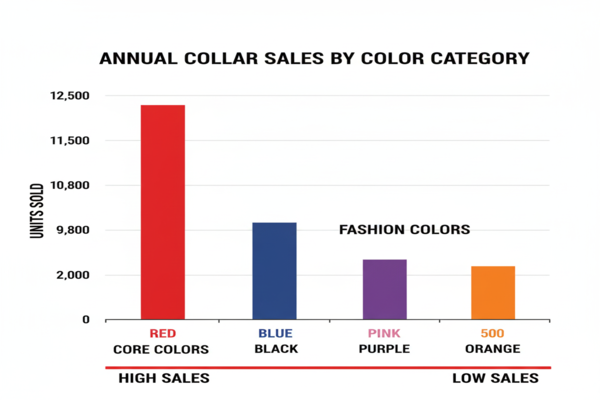
Not all colors are created equal. In over a decade of manufacturing, I've seen the sales data from partners around the world, and the trend is always the same. A few core colors will always make up the bulk of your sales. You need to order accordingly. Don't spread your budget evenly across every color you offer. Instead, weight your order heavily toward the proven winners. This ensures your best-sellers are always in stock, maximizing your sales and customer satisfaction.
Applying a Weighted Order Strategy
Imagine you need to order 2,000 collars across a range of seven colors. A "smart" order would look something like this, completely different from an "equal" order.
| Color | The "Equal" Order (High Risk) | The "Smart" Weighted Order (Lower Risk) | Why it Works |
|---|---|---|---|
| Black | 285 pcs | 500 pcs | Core, high-demand color. |
| Red | 285 pcs | 500 pcs | Core, high-demand color. |
| Blue | 285 pcs | 400 pcs | Core, high-demand color. |
| Pink | 285 pcs | 200 pcs | Popular but secondary. |
| Purple | 285 pcs | 150 pcs | Niche appeal. |
| Yellow | 285 pcs | 150 pcs | Niche appeal. |
| Brown | 285 pcs | 100 pcs | Lower demand. |
This strategy ensures your capital is invested in the SKUs most likely to sell quickly.
Why should you focus more on smaller sizes versus larger sizes?
You assume all dog sizes are equally common, so you stock them evenly. Now you're stuck with a surplus of extra-large collars while you're completely sold out of sizes small and medium.
The pet population is skewed heavily toward small and medium-sized dogs. Ordering more of the smaller collar sizes (S, M) and fewer of the larger sizes (L, XL) directly reflects market reality and prevents dead stock.
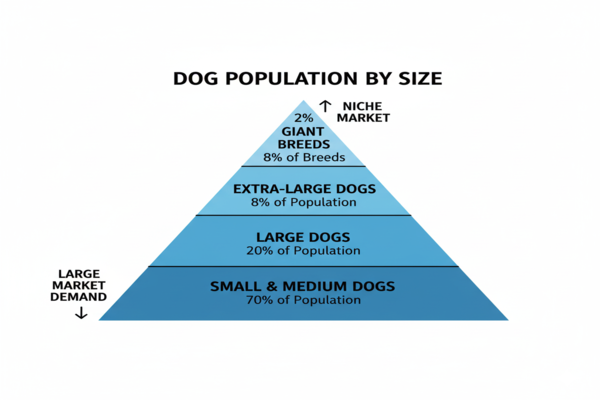
This is a simple demographic fact that many retailers overlook. While large dogs are very visible, they are outnumbered by their smaller counterparts. Think about urban living, apartment sizes, and breeding trends—they all favor smaller dogs. Your inventory must reflect this reality. I once helped a partner analyze his sales data after he complained about slow-moving stock. We discovered that over 60% of his sales came from sizes Small and Medium, yet those sizes only made up 50% of his inventory. The other 50% was dedicated to Large and Extra-Large, which only accounted for 40% of sales. By simply adjusting his size ratios on the next order, he dramatically improved his inventory turn and profitability. He wasn't selling more collars, but he was selling through his inventory much more efficiently.
How can sales reports help you optimize collar stock levels?
You base your reorders on gut feelings or what you "think" is selling well. This guessing game leads to costly mistakes, stockouts of popular items, and overstocking of unpopular ones.
Your sales report is your single most powerful tool for inventory optimization. It provides objective data on which specific SKUs—down to the exact size and color—are your true best-sellers, allowing you to reorder with precision.

Your sales data tells a story. It's your roadmap to smart purchasing. Stop guessing and start analyzing. A good inventory or Point of Sale (POS) system4 can give you a report showing sales by SKU. This is not just about looking at total sales for a "blue collar." It's about knowing that the "small blue collar" outsells the "large blue collar" by a three-to-one margin. This level of detail is gold.
Key Metrics to Track in Your Reports:
- Sales Velocity by SKU: How many units of each specific size and color combination do you sell per week or per month? This tells you which items need frequent reordering.
- Stock-to-Sales Ratio: How much inventory do you have on hand compared to your sales rate? This helps you identify slow-moving SKUs that are tying up cash.
- Sell-Through Rate: What percentage of the inventory you received has been sold over a specific period? This metric is crucial for evaluating new colors or styles.
Reviewing these reports before every purchase order is the difference between a reactive, chaotic inventory and a proactive, profitable one.
Conclusion
Avoiding overstocking isn't about buying less; it's about buying smarter. By treating collars like apparel, weighting your orders toward popular colors and smaller sizes, and letting your own sales data guide every decision, you can build a lean, profitable inventory that works for you, not against you.
Footnote:
Learning about the consequences of overstocking can help you avoid costly inventory mistakes. ↩
Sales data provides insights that can guide your purchasing decisions, reducing waste and increasing sales. ↩
Effective inventory planning strategies can streamline your operations and improve profitability. ↩
A POS system can provide valuable sales insights, helping you make informed inventory decisions. ↩