You assume a bigger order means a bigger discount, but your supplier’s quotes are inconsistent. You're left confused about how to actually get the best price on your next collar shipment.
True volume discounts1 from manufacturers like us are not just about total order value2. They are based on production efficiency3. An order with fewer, high-quantity items is more likely to get a better price than a large, complex order with many different SKUs.
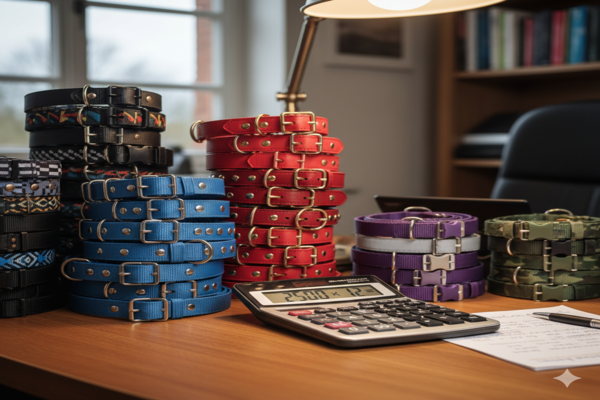
I had a partner call me once, completely confused. "My last order was $30,000," he said, "and you gave me a great price. This new order is for $50,000, but the unit price is higher. Why?" It's a question I get a lot, and the answer surprises most people. The secret to getting the best price isn't just about spending more money. It’s about understanding what makes my factory run smoothly. Let me pull back the curtain and show you how pricing really works from a manufacturer's perspective.
What are the standard pricing tiers for large collar orders?
You're trying to reach a specific spending goal, like $50,000, expecting to unlock a better pricing tier. But when the quote arrives, there's no discount, and you feel like the rules are being made up.
For a custom manufacturer, standard pricing tiers don't really exist. We reward production efficiency, not just total order value. A simple $30,000 order with 10 items is easier for us to produce than a complex $50,000 order with 100 different SKUs.
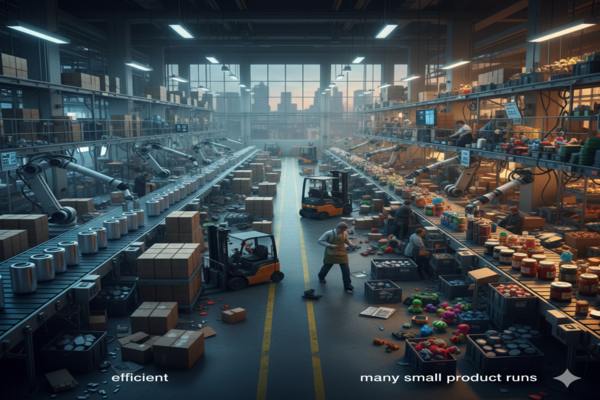
This is the most important concept to understand. Unlike a retailer selling finished goods, our "cost" is tied directly to manufacturing time and complexity. Every time we have to switch a machine from making a red collar to a blue one, or from a size small to a size large, it costs us time and money. That's why an order's structure is often more important than its total dollar value. A streamlined order allows us to run our machines continuously, which is where real savings are created. Those are the savings we can pass on to you.
| Order Scenario | Order A: The "Efficient Order" | Order B: The "Complex Order" |
|---|---|---|
| Total Value | $30,000 | $50,000 |
| No. of Items | 10 | 100 |
| Qty per Item | 3,000 units | 500 units |
| Our Analysis | More Profitable for Us. We set up machines 10 times and run long batches. Production is fast and efficient. This order gets a better unit price. | Less Profitable for Us. We have to set up machines 100 times for short runs. It's slow and creates more waste. The unit price will be higher. |
Conversely, very small orders (under $5,000) are very inefficient and often get a fixed FOB surcharge to cover the basic costs of processing.
How do freight costs factor into your bulk pricing?
You secured a great per-unit price, only to have your savings erased by a gigantic freight bill. This "hidden" cost per unit completely torpedoed your profit margin and budget.
The most effective way to lower your per-unit freight cost is to maximize the number of items you ship at once. Consolidating orders to fill a full container (FCL4) gives you a much better rate than shipping smaller, partial loads (LCL5).
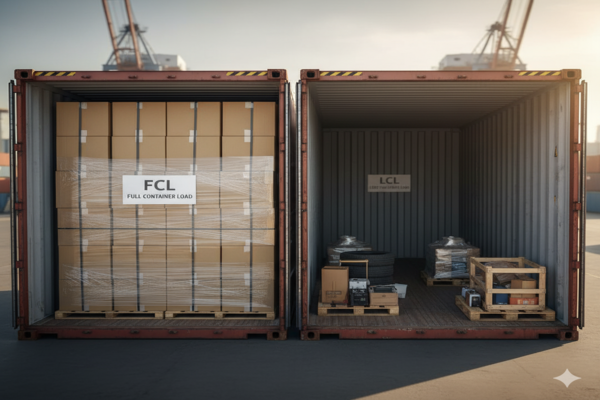
Freight is a huge part of your total landed cost, and you need to think about it strategically. Shipping companies have massive economies of scale. Sending a full container (FCL) across the ocean is far cheaper per cubic meter than sending a few pallets via Less than Container Load (LCL). While your per-unit product cost from me might not change, your per-unit shipping cost will drop dramatically. When you place a very large order that we know will fill a 20-foot or 40-foot container, your logistics become much simpler and cheaper. This saving on the freight side is often a much bigger "discount" than anything I can offer on the products themselves. I always advise partners to think in terms of filling a container. It forces you to plan your inventory, but the cost benefits are undeniable.
Why do customization options impact your volume discounts?
You want to offer a wide variety of colors and custom features. But every new option you add seems to increase your price per unit, even though your total order quantity is high.
Every custom element—a new buckle, a unique color of webbing, a special logo type—adds complexity to the production process. This complexity reduces our efficiency, which works against the volume discount you're trying to achieve.
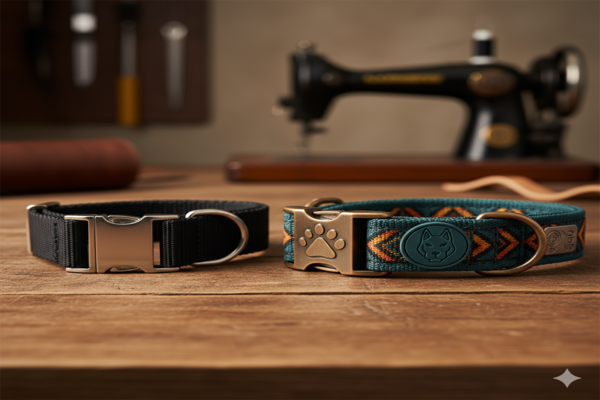
This goes back to the core idea of production efficiency. Let's say you want to order 10,000 collars. If all 10,000 are the same design in three standard colors, that's a simple, efficient run. We buy three colors of webbing in bulk, set up the machines, and go. But if you want those 10,000 collars split across 20 different webbing colors, with five different buckle types and two different kinds of logos, the situation changes completely. Now my team has to source and manage 27 different components. We have to stop and re-tool the assembly line constantly. Each change creates a chance for error and slows us down. While your total volume is high, the "volume per SKU" is low. To get the best of both worlds, be strategic. Choose a handful of winning custom features and order them in high quantities, rather than offering endless variety in small batches.
What are the best payment terms6 to maximize your savings?
You're trying to negotiate every last cent off the unit price. But you haven't considered how your payment terms could be a more powerful tool for securing a better overall deal.
Paying a larger portion of the order value upfront (e.g., 50% deposit instead of 30%) can sometimes unlock a small discount. This is because it reduces the manufacturer's financial risk7 and helps cover the immediate cost of raw materials.

While production efficiency is the biggest lever for discounts, cash flow is also important for any business, including mine. The standard payment term in our industry is a 30% deposit to start production and 70% balance before shipment. This is our default. However, when a partner offers a 50% deposit, it sends a strong signal of commitment and helps us secure raw materials without taking on as much financial exposure. In these cases, we have more flexibility to offer a small discount as a thank-you. It might not be a huge percentage, but on a large order, it adds up. It's a way of showing you're a serious, low-risk partner, and that kind of relationship always leads to better long-term pricing. It’s always worth asking: "Is there any flexibility on price if we offer a larger deposit?"
Conclusion
The path to the best price isn't about hitting magical spending tiers. It's about helping your supplier be more efficient. By placing simple, high-quantity orders, consolidating shipments, being strategic with customization, and building a trusted partnership, you create real savings that we can pass directly to you.
Footnote:
Understanding volume discounts can help you negotiate better prices and maximize savings on bulk orders. ↩
Discover how total order value affects pricing and what factors manufacturers consider. ↩
Learn how production efficiency impacts costs and pricing strategies in manufacturing to optimize your orders. ↩
Learn about Full Container Load (FCL) shipping and how it can save you money on freight. ↩
Explore Less than Container Load (LCL) shipping and its implications for cost efficiency. ↩
Understanding payment terms can unlock discounts and improve your negotiation power. ↩
Learn how reducing financial risk can lead to better pricing and terms from manufacturers. ↩