You've heard the advice: "Don't put all your eggs in one basket." So you're trying to manage several different collar suppliers. But now you're drowning in emails, chasing late orders, and dealing with inconsistent quality1 from each one.
For most small to mid-sized businesses, supplier diversity for a single product line creates more problems than it solves. It's far more effective and profitable to find one excellent, reliable supplier for your collars and build a deep, collaborative partnership with them.
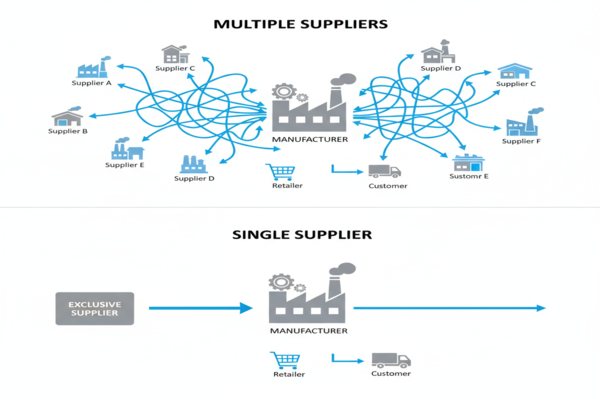
I've been in this industry for over a decade, and I see this all the time. Big corporations with huge procurement teams can afford to manage a complex network of global suppliers. But for a growing business like yours, your time is your most valuable asset. Spending it managing five different suppliers for the same type of product is a drain. Building a real partnership with one great supplier? That’s an investment that pays you back in growth, innovation, and peace of mind.
Why is having a single, great supplier better than managing several average ones?
Your team is stretched thin. They spend all day chasing different suppliers for updates, checking inconsistent quality, and coordinating separate shipments. This chaos is preventing you from focusing on sales and marketing.
A single great supplier becomes a true partner. They provide consistent quality, streamlined communication, and a deep understanding of your brand's needs. This saves an enormous amount of time and operational resources compared to supervising multiple vendors.

Let me be direct. Unless you are one of the top five biggest pet distributors in your country, you probably don't have a procurement team of five people. You have one, maybe two people, or maybe it's just you. Trying to develop new products with three or four different collar factories at once is nearly impossible. Each supplier has their own communication style, their own production schedule, and their own quality standards. It's a full-time job just to keep them all straight. When you focus on one excellent supplier for one product line—like leashes, collars, and harnesses—you build a deep relationship. They learn your brand, your quality expectations, and your goals. Communication becomes a simple shorthand. They become an extension of your own team, not just another name on a spreadsheet.
How does a deep partnership reduce supply chain risk2?
You worry that relying on one supplier is too risky. What if their factory has a problem, a material becomes scarce, or a shipping port gets shut down?
A deep partnership reduces risk through proactive communication and collaborative problem-solving. A true partner acts as your eyes and ears on the ground. They will warn you about potential issues long before they become crises, giving you time to plan and adapt together.

Many people think the only way to reduce risk is to have a backup supplier. But think about this: if a major shipping lane closes, a backup supplier in the same region won't help you. If there's a global shortage of a specific type of nylon, a backup supplier won't be able to get it either. The real risk is a lack of information. A true partner will call you weeks in advance and say, "Hey, we're seeing the cost of brass hardware start to climb. Let's place an order now before the price goes up." Or, "National holidays are coming up in two months, which will slow down production. We should start your next order early." This kind of proactive management is far more valuable than simply having a second name on your supplier list that you rarely talk to.
Why should your core supplier be part of your product development3?
Your new product ideas often hit a wall. You design something exciting, only to find out from your supplier that it's too expensive to make or technically difficult to produce reliably.
Integrating your core supplier into product development from the very beginning saves time, money, and frustration. Their manufacturing expertise can guide your designs to be more efficient, durable, and cost-effective, turning a good idea into a successful, profitable product.
Your supplier knows things you don't. They know which stitching method is the strongest. They know which material holds color best. They know a way to design a buckle that uses 10% less metal without sacrificing strength. When you treat them like a simple order-taker, you lose out on all that valuable knowledge. At BoonPets, our most successful partners bring us in early. They'll send us a rough sketch or an idea and ask, "What do you think? How can we make this great?" This collaboration allows us to suggest modifications that might reduce the cost, improve the function, or make the product stand out on the shelf. This turns development from a guessing game into a streamlined process for creating a winning product.
Conclusion
For a growing business, the theory of supplier diversity can be a practical nightmare. Instead of spreading yourself thin, focus on building a deep, trusting partnership with one excellent supplier for each core product category. This approach will save you time, reduce real-world risks, and help you innovate faster.
Footnote: