You've seen the headlines about Seresto collars1, and now your customers are asking questions. You're worried about the risk of stocking a controversial product, knowing one safety incident could damage your brand's reputation.
Seresto collars are manufactured by Elanco Animal Health. While the company maintains they are safe, the collars have been linked to a significant number of incident reports, prompting consumer concern and regulatory investigation. Safe alternatives rely on natural, plant-based active ingredients and rigorous material testing.
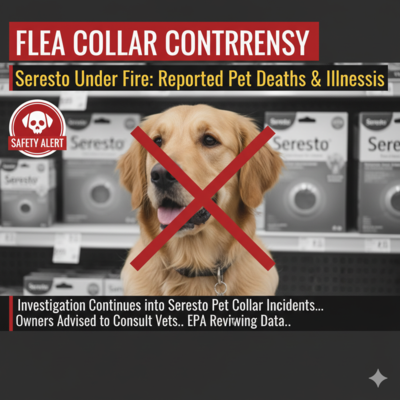
When the news about Seresto first broke, several of our partners called me, all with the same question: "How can we offer an effective flea and tick solution without this kind of risk?" They saw a top-selling product become a liability overnight, and it shook their confidence. This situation highlights a critical challenge for every pet retailer: how to provide functional products that are undeniably safe. It forces us to look deeper at the ingredients, the manufacturing process, and what it truly means to vet a supplier.
Who Actually Makes and Sells Seresto Collars Today?
You see the Seresto name everywhere, but the company behind it is less known. This confusion can make addressing customer concerns and understanding the product's history difficult.
Seresto is made by Elanco Animal Health. Knowing this is key, as Elanco acquired the product from its original creator, Bayer Animal Health, and is now responsible for its safety.
The Story Behind the Brand: From Bayer to Elanco
Understanding the corporate history is important for any procurement manager evaluating brand risk. Seresto was developed by Bayer Animal Health and became a dominant force in the pest control market. Its success was undeniable.
However, in 2020, a major shift occurred. Elanco Animal Health, another giant in the industry, completed a multi-billion dollar acquisition of Bayer's entire animal health division. This massive deal meant that Seresto, along with other popular brands, moved under Elanco's ownership and control.
Why does this matter to you as a retailer?
- Responsibility: Elanco is now the company that must answer to regulatory bodies like the EPA2. They are responsible for all ongoing safety monitoring, reporting, and public communication.
- Continuity: While the brand name on the box stayed the same to maintain customer recognition, the corporate structure, and potentially the internal standards and oversight, changed.
- Market Perception: For customers who follow the news, the distinction between Bayer and Elanco can be confusing. As a retailer, being able to clearly state "Seresto is an Elanco product" shows you are informed.
This transition from one industry giant to another is a critical piece of the puzzle when assessing the current state of the Seresto brand and its place in your inventory.
Are Seresto Flea Collars Considered Safe Now?
Your customers trust you to sell safe products. The lingering controversy around Seresto puts you in a tough position, forcing you to question if the product is safe for your shelves.
While Elanco states the collars are safe when used as directed, significant safety concerns persist. The EPA has not banned the product, but a 2022 congressional report called for a recall, citing thousands of reported incidents involving pet injury and death, which remains a major concern for retailers.
The Active Ingredients and the Controversy
The core of the issue lies with the two active ingredients in Seresto collars: imidacloprid and flumethrin. These are powerful insecticides that are embedded in the collar's plastic matrix and released slowly over time. While designed to kill fleas and ticks, concerns have been raised about their potential effects on pets themselves.
The controversy exploded following reports that revealed a high number of adverse event reports filed with the EPA. This sparked media attention and a congressional investigation.
Here are the key points you need to understand:
- The Accusations: The reports linked the collars to a range of issues, from skin irritation and lethargy to neurological problems (like seizures) and, in the most tragic cases, pet deaths.
- The Company's Stance: Elanco has consistently defended the product. They argue that the incident report rate is very low relative to the millions of collars sold and that correlation does not equal causation. They state that no scientific evidence has established a direct link between their active ingredients and pet deaths.
- The Regulatory Position: The EPA has reviewed the data multiple times and, to date, has not concluded that the collars warrant a recall. However, they continue to monitor the situation, and the public pressure remains high.
For a retailer, the scientific debate is almost secondary to the issue of public trust. The damage to Seresto's reputation is real, and stocking it means you are implicitly taking a side in this ongoing and very public safety debate.
What Are the Top Complaints About Seresto Collars?
You need to know exactly what your customers are worried about. Being unaware of the specific complaints makes it impossible to address their fears or offer them a better solution.
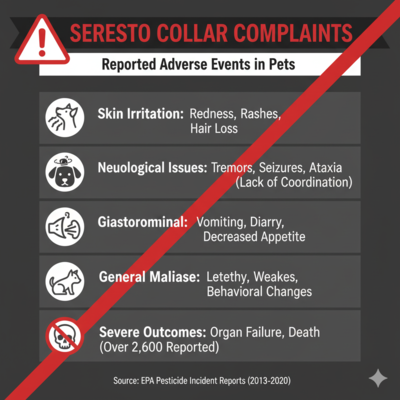
The most common complaints are skin-related, including irritation, rashes, and hair loss around the collar area. More severe complaints involve gastrointestinal issues like vomiting and lethargy, and deeply concerning neurological symptoms such as seizures and ataxia (loss of coordination).
From Minor Irritations to Major Incidents
When I talk to my partners about functional collars, we always separate customer complaints into different categories of severity. Understanding this spectrum helps you grasp the full scope of the risk. We've seen similar patterns with other chemical-based products in the past.
The complaints about Seresto can be grouped into three main tiers:
| Complaint Tier | Specific Symptoms Reported | Implication for Your Business |
|---|---|---|
| Tier 1: Dermal | Redness, scratching, bald patches, chemical burns or sores on the neck. | The most frequent complaint. Leads to unhappy customers and product returns. |
| Tier 2: Systemic | Lethargy, lack of appetite, vomiting, diarrhea. | Concerning because it suggests the active ingredients are affecting the pet's entire system, not just the skin. |
| Tier 3: Neurological & Severe | Seizures, tremors, stumbling, and, in the worst alleged cases, death. | This is the brand-destroying, liability-creating category that every single retailer rightly fears. |
The sheer volume of Tier 1 complaints is enough to create a customer service headache. But it's the existence of the Tier 3 complaints that creates a true ethical and business dilemma. Even if these severe cases are rare, their possibility is what has led many retailers to seek safer, natural alternatives. You aren't just managing returns; you're managing a significant potential brand risk.
How Can You Develop a Safe Alternative to Seresto Collars?
Knowing the problems with Seresto presents a market opportunity. But how do you create a functional collar that is genuinely safe and effective, so you can offer a trustworthy solution to your customers?
You develop a safe alternative by focusing on natural, plant-based active ingredients with proven repellent properties, such as cedarwood, peppermint, or citronella oil. The collar itself must be made from hypoallergenic, medical-grade materials like silicone, and the ingredients must be delivered through a proven slow-release technology3.

Building Safety from the Ground Up
At Boonpets, this has been our mission. We saw the concerns in the market and invested heavily in creating a flea and tick collar that puts safety first. We do not use pesticides. Instead, our entire approach is built on natural repellents.
Here’s our development philosophy, which you can use as a roadmap:
-
Start with Safe Ingredients: We source high-purity essential oils known for their repellent qualities. Our formulation is a proprietary blend of natural ingredients that work synergistically to deter pests without the use of harsh chemicals.
- Our Core Ingredients: A blend of natural plant oils known to be safe for pets but unpleasant for pests.
- The Key: We ensure these are natural ingredients, backed by certifications, not synthetic fragrances.
-
Choose a Hypoallergenic Base Material: The active ingredients need a carrier. We primarily use PVC or medical-grade silicone.
- Silicone: It’s non-porous, hypoallergenic, and extremely durable, making it an ideal choice for a product that sits against a pet's skin.
-
Perfect the Slow-Release Mechanism: A safe collar must release its ingredients slowly and consistently.
- We compound the natural active ingredients directly into the material matrix of the collar during production. This ensures a steady, controlled release over many months (our collars last over 8 months).
-
Prioritize Secure Packaging: Efficacy is lost if the ingredients evaporate before use. We package our collars in sealed bags, which are then placed in sturdy aluminum tins or PVC blisters to guarantee freshness and full potency for your customer.
This "safety-by-design" approach is the only way to build a product in this category that you can stand behind with 100% confidence.
How Do You Vet a Manufacturer for Functional Flea & Tick Collars?
You're ready to source a safer alternative, but you need to be sure your supplier is legitimate. How can you verify that their "natural" collar is truly safe and effective, not just a cheap collar sprayed with some oil?
Vet a manufacturer by demanding documentation. Ask for Material Safety Data Sheets (MSDS) for all ingredients, third-party lab test results for efficacy, and certifications for non-toxic materials. A trustworthy manufacturer will also have a clear Quality Control process and be transparent about their entire production method.

A Checklist for Finding a Trustworthy Partner
As someone who runs a factory, I know exactly what a serious buyer should be asking. If a potential supplier can't answer these questions confidently and with proof, you should walk away. Your brand is on the line.
When you're vetting a potential OEM/ODM partner for a functional collar, use this checklist:
| Question to Ask | What a "Good" Answer Looks Like | Red Flag (A "Bad" Answer) |
|---|---|---|
| "Can you provide MSDS for your active ingredients?" | "Yes, here is the full documentation for our natural oils, proving their purity." | "They are just natural oils, they don't need paperwork." or "That's proprietary." |
| "What is the collar material, and is it certified hypoallergenic?" | "We use medical-grade silicone. Here are the material specifications and certifications." | "It's a special plastic." (No specifics) |
| "Do you have third-party efficacy testing?" | "Yes, here are the lab reports showing its repellent effectiveness over 8 months." | "We know it works because our customers say so." (No data) |
| "How are the ingredients infused into the collar?" | "They are compounded into the silicone before molding for a consistent slow release." | "We spray them on at the end." (This is ineffective and inconsistent) |
| "Can I see your quality control checklist?" | "Of course. We inspect for material defects, ensure sealed packaging, and verify batch consistency." | "We just look at them to make sure they look good." |
At Boonpets, we welcome these questions. We have the certifications and the process in place because we built our functional collar line to be the safe, reliable alternative the market desperately needs. We can produce them in different shapes and sizes for both cats and dogs, with secure packaging that guarantees an 8+ month lifespan. Please contact us for the details and documentation.
Conclusion
The Seresto controversy has created a clear demand for safe, natural flea and tick solutions. By partnering with a transparent manufacturer, you can confidently offer an effective alternative and build customer trust.
Footnote: