You're either tying up too much cash in inventory or constantly running out of your best-sellers. Finding the right order rhythm feels impossible and is costing you both sales and profit.
The ideal order frequency balances your cash flow1, warehouse space, and total lead time. For international suppliers, this often means ordering 2-4 times per year, placing a new order at least 3-4 months before you expect to run out of stock.
I've seen partners struggle with this for years. They either order too much at once and choke their cash flow, or order too little, too late, and miss out on key selling seasons. The "right" answer isn't a single number; it's a strategy built on understanding all the moving parts. Let's break down the factors you need to consider to find the perfect rhythm for your business.
What lead times should you really be accounting for?
Your supplier quoted a 30-day production time. But months later, you're still waiting for your collars, and your shelves are bare. You are losing sales because of hidden delays you didn't plan for.
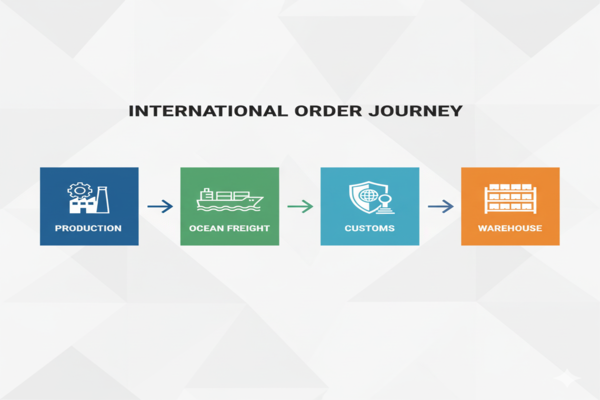
You must account for the total lead time: production (30-45 days), ocean freight2 (30-45 days), and customs clearance (1-2 weeks). From placing your order with a supplier in China to having it in your warehouse, plan for a minimum of three months.
This is the most common mistake I see. People focus only on the production time I quote them. But that's just one piece of the puzzle. The journey from my factory door to yours is a long one. For my partners in Europe or North America, ninety days is a safe and realistic window. Anything less is a gamble.
Breaking Down the Total Lead Time
- Production (30-45 days): This is the time it takes us to source materials and manufacture your order. Custom orders or orders during peak season can take longer.
- Ocean Freight (30-45 days): This is the time your container spends on a ship. It can vary based on port congestion, weather, and shipping lane traffic.
- Customs & Inland Transit (7-14 days): Once the ship arrives, your container has to be unloaded, clear customs, and then be transported by truck or rail to your warehouse.
This simple timeline shows why planning ahead is critical.
| Stage | Typical Duration | Notes |
|---|---|---|
| Production | 30-45 Days | Can be longer during peak season. |
| Ocean Freight | 30-45 Days | Port congestion can add unexpected delays. |
| Customs & Delivery | 7-14 Days | Varies greatly by port and country. |
| Total Minimum | ~90 Days | Plan for 3 months as a safe buffer. |
This is why you must place your next order when you still have at least a three-month supply in your warehouse.
How do you balance cash flow against import costs3?
You want to save money with a huge yearly order, but the massive upfront payment cripples your cash flow. You're left with no capital to invest in marketing or other product lines.
Ordering once a year offers the best per-unit shipping cost but demands huge capital. Ordering multiple times a year frees up cash but increases your total annual shipping and operational costs. Most businesses find a balance with 2-3 orders per year.

This is the central trade-off every procurement manager faces. There is no single right answer, only the right answer for your business's financial situation. Let's analyze the two main strategies.
Strategy 1: The Annual Mega-Order
- Pros: You get the best possible price on ocean freight because you're shipping a full container. You also reduce administrative work to just one order a year. Your total landed cost per unit is minimized.
- Cons: This requires a massive cash outlay. That money is then tied up in inventory sitting in your warehouse for months. It also increases your risk—if a product doesn't sell well, you're stuck with a mountain of it.
Strategy 2: Frequent Smaller Orders
- Pros: This is much better for your cash flow1. You are only paying for stock you expect to sell in the next few months. This allows you to be more agile and test new products without a huge commitment.
- Cons: Your per-unit shipping costs will be higher, especially if you are using LCL (Less than Container Load) shipping. You also increase your administrative workload4 with more orders to track and process.
Most of my successful partners find a healthy middle ground, placing two or three larger, consolidated orders per year to balance these competing pressures.
How does seasonal demand affect your reorder cycles5?
You ordered your usual quantity of collars, but a sudden holiday rush wiped out your inventory in two weeks. Now you're facing six weeks of empty shelves during your most profitable season.
You must adjust your order frequency to build up inventory before your peak seasons. This means placing larger orders in the preceding quarter—for example, ordering your Christmas stock in July—to ensure you can meet the holiday demand without running out.
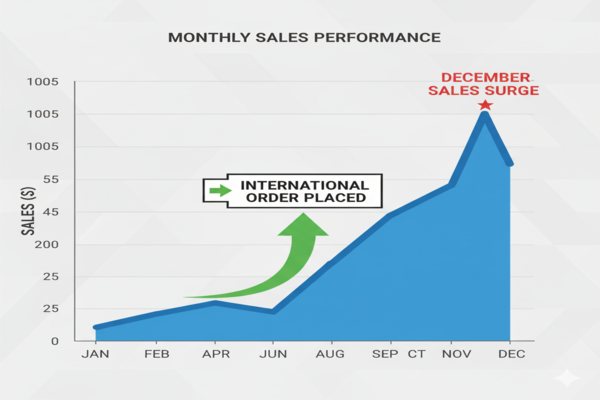
Your sales are not a flat line throughout the year, so your ordering shouldn't be either. You need to order ahead of the curve. If you know that sales of bright, waterproof collars spike in May and June, you cannot place that order in April. With a three-month lead time, you need to place that summer-specific order in January or February. The same logic applies to the holiday season, which is our busiest production time.
A Sample Seasonal Ordering Calendar
- Q1 (Jan-Mar): Place orders for your peak Summer season (June-August). This is the time for waterproof materials and bright colors.
- Q2 (Apr-Jun): A good time to replenish core, year-round best-sellers.
- Q3 (Jul-Sep): This is the critical window to place your Christmas and holiday season orders. Production lines get very busy, so ordering early is key.
- Q4 (Oct-Dec): Plan your inventory for the post-holiday sales dip and the beginning of the new year.
By looking at last year's sales data, you can anticipate these peaks and order proactively, ensuring you have the right stock at the right time.
How can you protect your supply chain from disruptions?
An unexpected port closure or a sudden factory shutdown delays your shipment by a month. Your safety stock is gone, and you have no inventory to sell, causing massive customer frustration.
Build a buffer into your planning. This means holding slightly more inventory (safety stock) of your best-sellers and maintaining a strong relationship with your supplier so you get early warnings about potential delays like factory holidays or raw material shortages.
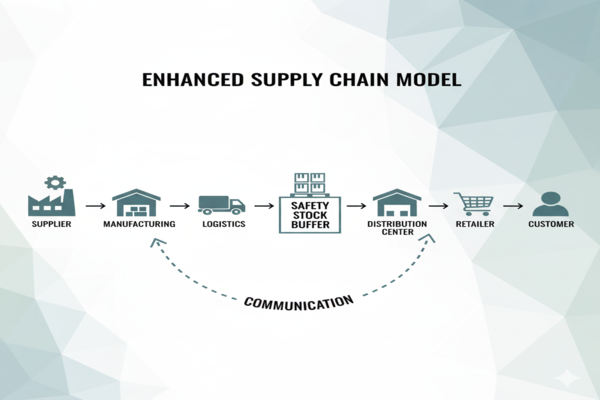
The world is unpredictable. In the past few years, we've seen everything from global pandemics to canals being blocked. While you can't predict every crisis, you can build a more resilient supply chain. The easiest way is with safety stock. If you normally reorder when you have 3 months of inventory left, a safer strategy might be to reorder when you have 4 months of stock. That extra month is your buffer against the unexpected. Good communication is your other key defense. A true partner, not just a supplier, will tell you ahead of time about things that could impact your order. For example, I always remind my partners about the Chinese New Year holiday months in advance. Our country shuts down for weeks, and if you don't plan for it, it will cause a huge delay. A good supplier helps you see around corners.
Conclusion
Finding the ideal order frequency means moving from reactive purchasing to proactive planning. By mastering your total lead time, balancing financial trade-offs, ordering ahead of seasonal demand, and building in a safety buffer, you can create a reliable and profitable inventory rhythm6 for your business.
Footnote:
Improving cash flow management is essential for sustaining business operations and growth. ↩
Exploring ocean freight management can lead to cost savings and improved shipping efficiency. ↩
Identifying factors that affect import costs can help you make informed purchasing decisions. ↩
Reducing administrative workload can streamline operations and free up resources for growth. ↩
Effective management of reorder cycles can prevent stockouts and optimize inventory levels. ↩
Understanding inventory rhythm can help you maintain optimal stock levels and improve profitability. ↩