You're trying to build a profitable dog collar line, but you're overwhelmed. Choosing between countless suppliers, materials, and features feels like a gamble, with your investment on the line.
Bulk buyers must prioritize three things: 1) product durability and quality, 2) safety features and a full size range, and 3) supplier reliability. These pillars minimize returns, meet customer needs, and ensure a stable, profitable partnership for your business.

As a manufacturer, I've worked with partners on every side of this decision. I’ve seen buyers get distracted by a flashy new feature or a rock-bottom price, only to regret it later when they're dealing with customer complaints or delivery delays. Success in this business isn't about finding the cheapest product. It's about building a reliable product line with a reliable partner. The most successful distributors I know are the ones who get these three core priorities right from the start.
How does product durability impact your long-term costs?
You focused on a low unit price to maximize your initial margin. Now, you're buried in returns for frayed, broken collars, and your "savings" are being wiped out by replacement costs and unhappy customers.
Durability directly lowers your long-term costs. High-quality materials and construction mean fewer product failures, which drastically reduces returns, customer service hours, and replacement inventory expenses. A durable product builds brand trust and protects your bottom line.
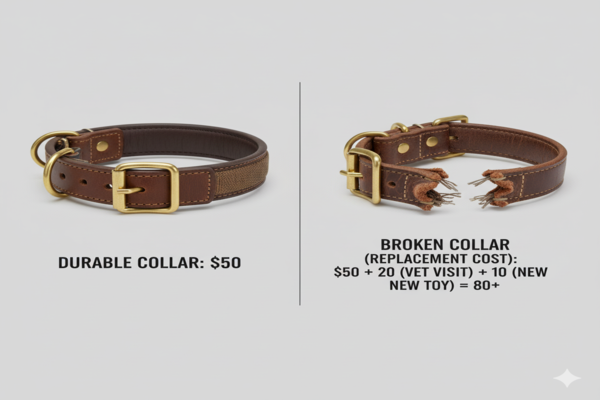
This is the hidden math that many buyers miss. They see a collar that costs $1 to produce and another that costs $3. The $1 collar seems like an obvious win. But if 10% of those cheap collars are returned, your real cost per successful sale is much higher. You have shipping costs for the return, the cost of the replacement product, and the salary of the person processing it all. More importantly, you've damaged your brand's reputation with that customer. A durable product, made with materials like high-grade nylon or BioThane1 and solid hardware, might cost more upfront. But its failure rate is near zero. This not only protects your profit but also builds the kind of customer loyalty that leads to repeat business. It's about shifting focus from unit price to total cost of ownership.
What key safety features and sizing should you demand?
Your current collar selection is basic. You're missing key safety features, and your limited sizes mean you're turning away customers with very large or very small dogs.
Prioritize collars with essential safety features like high-visibility reflective strips and secure, corrosion-resistant hardware. Also, insist on a comprehensive size range from XS to XL. This makes your product line safer, more inclusive, and more attractive to all dog owners.
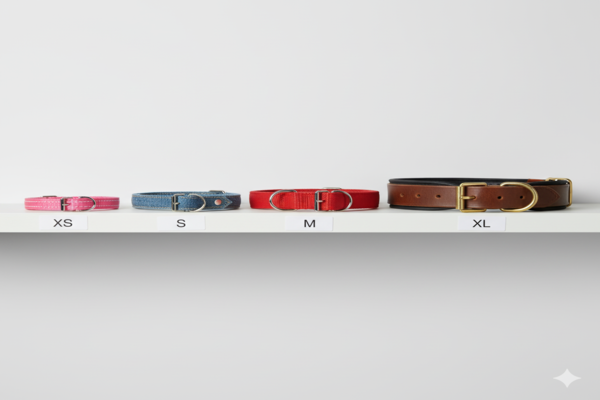
Safety and fit are non-negotiable. They are the absolute foundation of a responsible pet product. When I work with a new partner, this is one of the first conversations we have. A collar must do its job without fail. This starts with the hardware—buckles and D-rings should be made from materials like stainless steel or solid brass that won't rust or break under pressure. For nighttime safety, adding a reflective strip is a simple but critical feature that customers actively look for. It's a huge selling point.
Your Essential Safety & Sizing Checklist
- Secure Buckles: Are they just plastic, or are they engineered for strength? A breakaway buckle might be good for cats, but for dogs, you need security.
- Strong D-Rings: A flimsy D-ring for attaching a leash is a major point of failure. It must be solid and securely attached.
- High Visibility: A simple reflective stitch or a full reflective band makes a dog visible to cars at night. This is a must-have for any premium line.
- Full Size Range: Offering a complete size run shows that you cater to all dogs, not just the easy-to-fit ones. It builds brand credibility.
Why is your supplier's reliability more important than their price?
You found a supplier with an incredibly low price. But now you're facing missed deadlines, inconsistent quality in every batch, and poor communication, putting your entire business at risk.
A reliable supplier is your partner in success. Their consistent quality, on-time delivery, and transparent communication are more valuable than a low price because they provide stability. This allows you to manage inventory, satisfy your customers, and grow your brand without constant crises.

I built my company on this principle. A low price is easy to offer once. The hard part is delivering a high-quality product at a fair price, on time, every single time. That is what reliability means. You, as the buyer, need to look beyond the price sheet. Ask potential suppliers about their quality control process. Do they have third-party inspections? What is their track record for on-time shipping? How do they handle problems when they arise? A good partner doesn't just ship boxes; they communicate proactively and solve problems with you. This stability is the true foundation of a profitable business relationship. It allows you to focus on selling and marketing, confident that the product you've promised will be there.
What certifications do international markets require?
You want to expand into Europe or other international markets. But you're unsure about the complex web of regulations and certifications, fearing your products will be rejected by customs.
Key certifications to look for are ISO 90012 for quality management systems and an understanding of regulations like REACH for Europe, which restricts harmful chemicals. A good manufacturing partner will already have experience and documentation to ensure smooth entry into these markets.
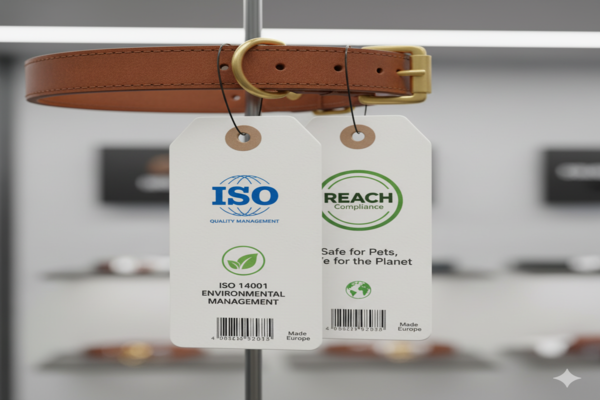
Navigating international regulations can be a nightmare if you're on your own. For example, the REACH regulation in the European Union is very strict about the chemicals used in consumer products, including the dyes and coatings on a dog collar. If your products aren't compliant, they can be stopped at the border, costing you a fortune. This is where your supplier's experience is critical. At BoonPets, we've been exporting to over 30 countries for years. We know the requirements for different markets and ensure our materials and processes are compliant from the start. We provide our partners with the necessary documentation to make customs clearance a smooth process. Don't try to become an expert on global regulations yourself; instead, partner with someone who already is.
Conclusion
When buying dog collars in bulk, look past the unit cost. Prioritize product durability, comprehensive safety features, and true supplier reliability. This strategic focus will lower your long-term costs, build a strong brand reputation, and create a stable, profitable foundation for your business's future growth.
Footnote: