Walk into almost any pet retail shop in Europe. You will spot the blue and white TRIXIE logo instantly.
Consumers see that logo and immediately think of strict European standards. They picture German engineering and unfailing reliability. But branding is just the surface layer. If you manage procurement for a mid-sized retailer or distribution network, you must understand the machinery operating behind the logo.
I spend my days building supply chains for global pet brands. Buyers constantly ask me about these European giants. Does TRIXIE actually manufacture their own harnesses and leashes?
The short answer is no. They outsource.
Understanding how massive brands structure their supply chains exposes a massive opportunity. I will break down exactly how this model works—and how you can bypass these branded markups to skyrocket your own wholesale margins.
The German Origins and Corporate History of TRIXIE Heimtierbedarf
TRIXIE Heimtierbedarf started in 1974. Bonnik Hansen founded the company in Flensburg, Germany, operating out of a small van.
Through decades of smart expansion, it evolved into a European behemoth. Today, the company supplies pet accessories to over 80 countries. Their current headquarters in Tarp, Germany, is a masterclass in modern corporate infrastructure. They employ hundreds of people and manage an incredibly complex catalog of over 6,500 items.
Yet, you must recognize one crucial distinction. TRIXIE built its empire on logistics, warehousing, and distribution. They are an elite sales and marketing engine. They hold inventory and dispatch orders efficiently across the continent.
But owning the distribution network is entirely different from owning the factory floor.
Where Are TRIXIE Pet Products Actually Manufactured?
When it comes to the physical creation of a reflective nylon leash or an adjustable tactical harness, the assembly lines are far from the German border.
Like almost every major player in the global pet industry, TRIXIE relies heavily on manufacturing partners in Asia. Processing textiles, casting metal hardware, and sewing complex webbing patterns at scale require specialized infrastructure. Producing these items strictly in Western Europe would shatter wholesale logic and retail price points.
During a recent walk-through of an allied hardware plating facility in Southern China, I noticed this dynamic firsthand. I was inspecting a batch of our custom electrophoresis black zinc-alloy buckles. On an adjacent assembly line, thousands of heavy-duty D-rings were tumbling out of a polishing machine entirely dedicated to a massive European pet brand.
The factory was Chinese. The finished product was marketed as European.
This is not a flaw; it is standard operating procedure. Export-oriented OEM1 (Original Equipment Manufacturer) and ODM (Original Design Manufacturer) facilities in Asia are the actual architects behind the world's best-selling pet gear.
Analyzing TRIXIE's Global Supply Chain and Distribution Network
Let us look at the financial mechanics of a massive distribution brand.
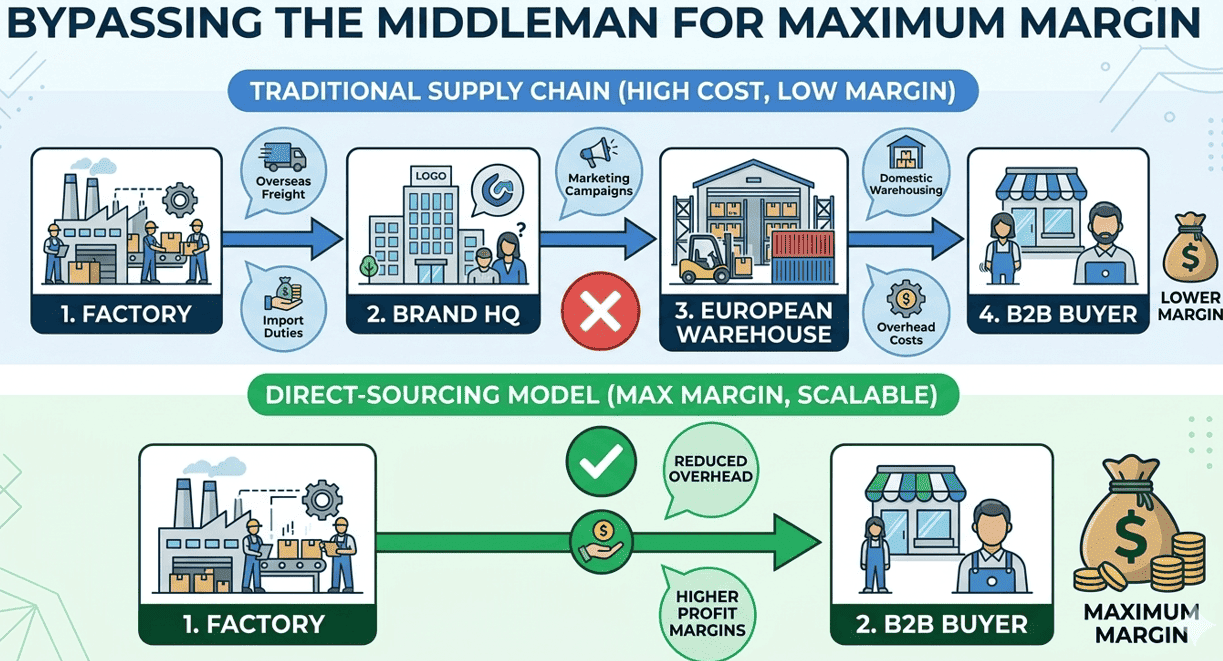
A company holding 6,500 SKUs in a massive European facility requires immense working capital. They must pay for overseas freight, import duties, domestic warehousing, European labor, and heavy marketing campaigns.
Every single one of those overhead costs is baked into the wholesale price you pay.
When you buy a branded product from a giant distributor, you are effectively funding their massive storage footprint. You get the convenience of ordering smaller quantities of varied items, but you sacrifice your margin. For independent brand owners and dynamic retailers, buying from a middleman severely throttles your ability to scale.
The Disconnect Between European Brand Identity and Asian Manufacturing Realities
This gap between European branding and Asian manufacturing presents your biggest strategic advantage.
Consumers pay a premium for a European label. But as a buyer, paying that same premium makes zero sense if you can access the exact same level of manufacturing quality directly.
A mid-sized European omnichannel retailer brought this exact problem to me last year. They were buying premium dog walking gear from established European distributors. Their margins were razor-thin—hovering around 15%. They struggled to compete with Amazon and local chain stores.
I audited their inventory. They were paying a massive premium simply for a European hangtag stitched onto an Asian-made product.
We helped them bypass the distributor entirely. They transitioned to sourcing [custom dog leashes](link: /products/dog-leashes/) directly from our factory. We matched the exact tensile strength of their previous products, upgraded their hardware to a premium pearl nickel finish, and applied their own brand logo via laser engraving.
Their profit margins jumped from 15% to 45% in a single quarter. More importantly, they finally owned a unique product that their competitors could not easily copy.
Strategic Sourcing: Finding Direct OEM/ODM Alternatives to Maximize B2B Margins
You do not need to settle for generic Alibaba imports to get good pricing. You need a strategic factory partner who operates with a recognized brand mindset.
If you want to cut out the middleman, use this three-step framework to vet direct manufacturers:
1. Demand Cross-Industry Innovation Most factories just copy what already exists. Avoid them. Look for a partner who actively researches cross-industry trends. Your supplier should be incorporating materials from the outdoor sporting goods or tactical gear industries into their pet products. This is how you differentiate your brand.
2. Take Total Customization Control Never settle for off-the-shelf items. A true manufacturing partner offers bespoke details at scale. Insist on custom webbing techniques, proprietary hardware finishes like gunmetal or copper, and private-label packaging. If a facility cannot accommodate low Minimum Order Quantities (MOQs) for custom [OEM and ODM production](link: /services/oem-odm/), they will lock up your cash flow.
3. Insist on a "Sleep Well" Guarantee The biggest fear in overseas sourcing is receiving a container full of defective products. Eliminate that risk upfront. Ask the factory about their exact defect rate2—it should be under 1%. Require a written after-sales policy. We guarantee immediate compensation or replacement for any product discrepancies. If a supplier refuses to take financial responsibility for their mistakes, walk away immediately.
The most successful pet retail brands do not just buy boxes of products. They leverage direct, high-performance manufacturing to build their own moats. By bypassing traditional distribution networks, you reclaim your margins, reduce your inventory risk, and take total control over your product's design. Use this knowledge to stop funding someone else's brand, and start scaling yours.
Footnote: