
Private equity ownership1 often obscures exact figures, yet market indicators paint a clear picture of PetSmart2's massive scale and the specific pressures they face regarding debt and operational costs.
PetSmart generates an estimated annual revenue3 exceeding $10 billion, driven heavily by its extensive brick-and-mortar footprint and service offerings like grooming. However, their financial reality is complicated by significant debt obligations resulting from the leveraged buyout by BC Partners4, creating a landscape where high cash flow is mandatory to service interest rather than purely for innovation.
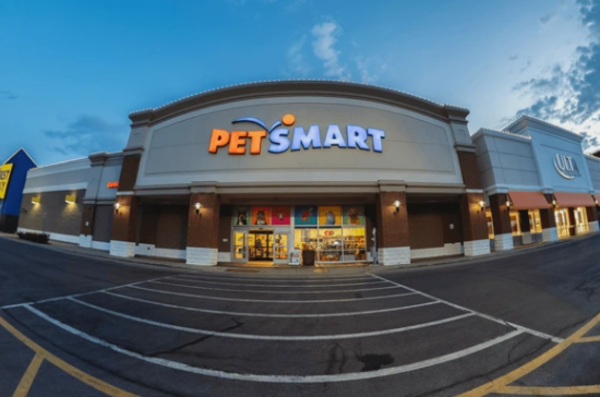
Understanding the financial machinery of a giant like PetSmart is not just about spying on a competitor. It is about spotting the gaps in their armor that nimble businesses can exploit.
What do current financials reveal about PetSmart's operational stability?
Recent credit ratings and market reports suggest a stable yet leveraged position, with the company focusing intensely on maximizing cash flow from existing physical assets.
While they remain the dominant player in North American pet retail, their financial flexibility is somewhat constrained compared to debt-free entities. They separated from Chewy financially, which removed a high-growth asset but also a massive expense line, allowing them to focus on profitability over pure market share expansion.

The Double-Edged Sword of Private Equity Ownership
We need to look past the top-line revenue numbers to understand the engine driving this retailer. PetSmart is owned by a consortium led by BC Partners. This ownership structure means the company operates with a significant debt load. Credit rating agencies like Moody’s and S&P often view them through the lens of their ability to service this debt. For you as a procurement manager, this matters immensely.
A competitor burdened by debt often becomes risk-averse. They prioritize "safe" inventory—churning out generic products that guarantee volume but lack soul. They cut costs in manufacturing to preserve margin points for interest payments. Here is the breakdown of their likely financial limitation versus your opportunity:
| Financial Factor | PetSmart's Constraint | Your Strategic Advantage |
|---|---|---|
| Capital Allocation | Must service billions in debt first. | You can invest in higher-quality stock. |
| Inventory Risk | Relies on proven, mass-market sellers. | You can test trend-forward designs. |
| Supplier Relations | Squeezes vendors on price to the penny. | You can build partnerships based on quality. |
At Boonpets, we see this gap constantly. When big box retailers squeeze manufacturers for the lowest possible price to satisfy private equity owners, material quality drops. We take the opposite approach. We help you stockpile premium gear—like tactical harnesses with reinforced stitching—that mass-market giants are too financially conservative to risk ordering.
Where does the real profit come from in their revenue streams?
Analyzing their shelf space reveals that while low-margin food drives foot traffic, high-margin hard goods and services are the true profit generators keeping the ledger balanced.
PetSmart has successfully pivoted to become a service destination, using grooming and boarding to subsidize lower margins on consumables. However, their hard goods section—accessories, leashes, and toys—remains a critical profit center where they often rely on generic private labels to capture maximum margin.

Analysis of Product Margins and Category Mix
Retail giants use a specific formula. They sell dog food at a razor-thin margin to get the customer through the door. Once inside, they rely on the customer buying a leash, a collar, or a bed. These "hard goods" often carry margins of 50% to 70% for big retailers. However, to maintain those margins at their scale, they often compromise on manufacturing complexity.
According to general industry data, hard goods represent a smaller portion of total revenue compared to food, but a disproportionately large share of net profit. Yet, because PetSmart manages thousands of stores, they must standardize. This leads to what I call "The Beige Wall"—rows of identical, safe, uninspiring accessories.
This is where your procurement strategy can shine. You do not need to compete on low-margin kibble. You can attack their high-margin sanctuary with superior products.
- Differentiation: Instead of a basic nylon strap, offer a Boonpets neoprene-padded collar with reflective threading.
- Narrative: Their product is a commodity; yours is a solution for safety and comfort.
- Pricing Power: Customers willingly pay 15% more for a product that feels 100% better in hand.
By sourcing from a manufacturer that allows for custom modifications (OEM), you create a "hard goods" category that acts as a destination driver for your business, not just an impulse buy.
How does their performance compare to digital-first peers like Chewy?
Market data indicates a clear divergence where digital peers capture growth through convenience, while PetSmart stabilizes revenue through immediate physical availability and services.
Chewy (formerly a subsidiary) continues to grow revenue rapidly but often struggles with the profitability of shipping heavy low-value items. PetSmart, conversely, leverages its physical stores as micro-fulfillment centers, improving margins on "click and collect" orders versus pure-play shipping models.
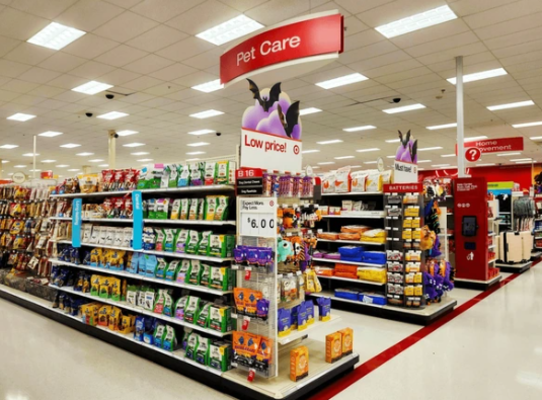
The Brick-and-Mortar vs. E-commerce Margin Battle
The financial battleground has shifted. Years ago, it was about who had the most stores. Now, it is about "Unit Economics"—the profit made on a single order. Chewy pushes volume, but shipping a 40lb bag of food eats profit alive. PetSmart uses its stores to offset this. But where do you fit in?
Mid-sized retailers cannot win a price war on logistics against Chewy, nor a real estate war against PetSmart. You win by owning the specific niche of "Curated Quality."
Let us analyze the weakness in their models:
- The Digital Disconnect: You cannot touch the fabric on Chewy.
- The Big Box Genericness: You cannot find unique style at PetSmart.
Your financial health depends on high-margin accessory categories—specifically Walking and Travel gear. Industry reports from the APPA show spending in this category remains resilient.
When you stock a Boonpets heavy-duty harness, you provide a tactile experience PetSmart lacks. A customer picks it up. They feel the weight of the metal hardware. They test the buckle. That physical confirmation of quality converts a sale at a higher price point than a digital image ever could. We design our packaging and product finish specifically to win this "in-hand" moment, giving you an edge the giants cannot automate.
What strategic insights5 can smaller distributors apply effectively?
The strongest financial move for challenger brands is to abandon direct competition on commodities and aggressively pursue premium private label differentiation.
PetSmart utilizes its size to dictate terms to major brands like Purina or Blue Buffalo. A mid-sized distributor cannot play that game. The winning strategy is to develop a proprietary brand identity that offers superior value perceptions, effectively insulating your margins from direct price comparisons with the giants.
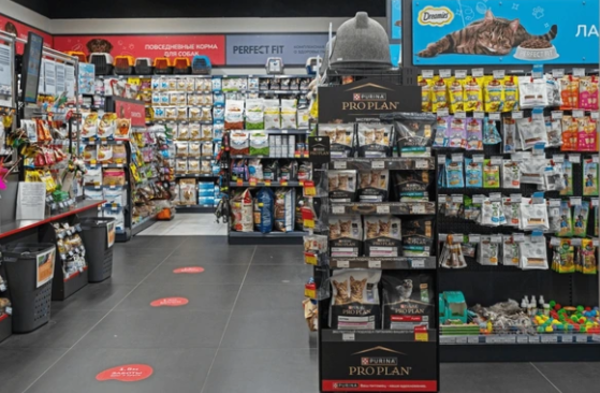
Implementing a "Premium Private Label" Strategy
Financial success for distinct retailers comes down to brand equity. If you sell the exact same brand of leash as PetSmart, the customer will just Google the lowest price. You lose that battle every time.
The insight here is simple: Own the detailed specifications.
PetSmart's private brands (like Top Paw) are designed for mass appeal and low production costs. They usually use standard webbing and basic zinc-alloy hardware. You can pivot to a "Premium Private Label" strategy. This does not mean expensive; it means higher perceived value.
Here is how we execute this at Boonpets for our partners:
- Material Upgrade: We switch standard nylon for high-density, silk-feel polyester. The cost difference is cents; the value difference is dollars.
- Functionality: We add a secondary traffic handle to a standard leash. It is a small manufacturing tweak that solves a real dog owner’s pain point.
- Branding: We allow low Minimum Order Quantities (MOQs) for custom rubber logos, meaning you build your asset, not a vendor’s.
By selling a product that cannot be price-matched against a big box store because it literally does not exist there, you protect your margins. This is the only sustainable financial wall against a giant.
How does the supply chain impact inventory turnover and cash flow?
Huge organizations wrestle with bloated supply chains and slow reaction times, whereas your financial advantage lies in speed, lower minimums, and rapid inventory turnover.
PetSmart plans inventory cycles months, sometimes a year, in advance. This locks up millions in capital and makes them slow to react to emerging trends. Smaller players can utilize agile manufacturing partners to bring fresh styles to market quarterly, keeping cash flow fluid and stock relevant.

Agility as a Financial Instrument
In procurement, cash stuck in a warehouse is a liability. Big box retailers have "heavy" supply chains. They order containers of a single SKU to get a price break. If that color goes out of style, they are forced to discount, eroding that margin they fought so hard for.
Your financial health relies on Stock Velocity. You need products that arrive, sell, and get reordered.
This is why Boonpets structured our manufacturing differently from the typical massive Chinese factories.
- Lower MOQs: We do not force you to buy 5,000 units of one collar. You can split that across sizes and colors. This keeps your cash liquid.
- Faster Turnaround: Because we control the raw material procurement locally, we cut weeks off production time.
- Quality Control as Cost Saving: Returns kill profit. A 3% return rate can wipe out the net profit of a batch. We use third-party inspections and internal stress testing (like tensile strength verification) to ensure what you sell stays sold.
By partnering with a manufacturer that prioritizes your cash flow rather than just their own production convenience, you operate with a leaner, more profitable balance sheet than the giants.
What are the future outlooks and risks in this sector?
Economic headwinds suggest a tightening of discretionary spending, yet the "pet humanization" trend ensures that high-quality, durable goods will continue to outperform disposable options.
While the post-pandemic boom has leveled off, data suggests owners are not cutting back on pet care—they are just becoming choosey. They are moving away from frivolous purchases toward investment pieces that promise longevity, favorable to retailers focusing on durability.

The Shift from "More" to "Better"
The easy money era of 2021 is over. Inflation impacts every household. When budgets tighten, consumers stop buying cheap replacements. They start looking for "Buy It For Life" (or at least, for the dog's life) quality.
PetSmart relies on volume turnover. Their model assumes a leash breaks or frays, and the customer returns to buy another. In a recessionary environment, that customer gets annoyed. They start looking for a brand that promises they won't have to buy another one next month.
This is your financial safe harbor. We call it "Durability Marketing."
When you present a proposal to your internal team, focus on this separation. Data from EU and NA markets show that even during downturns, "Premium" and "Super Premium" segments often hold value better than "Economy." Why? because the core customer base for premium goods is less sensitive to inflation.
We position our partners here. By using reinforced stitching patterns, heavy-duty buckles, and colorfast dyes, we help you sell a product that justifies its price tag. You are not just selling a accessory; you are selling financial prudence to the consumer. "Buy this $30 harness once, rather than three $15 ones." That is a winning pitch in today's economy.
Conclusion
PetSmart remains a financial titan, but their reliance on debt and mass-market volume creates gaps in quality and agility. Your opportunity lies in exploiting these gaps by partnering with flexible manufacturers to offer superior, differentiated products that command higher margins and build lasting customer loyalty.
Footnote:
Explore how private equity ownership affects financial strategies and operational decisions in retail. ↩
Learn about PetSmart's financial health and market position in the pet retail industry. ↩
Understand the significance of annual revenue in shaping business strategies and decisions. ↩
Gain insights into BC Partners and their impact on companies they invest in. ↩
Discover actionable insights that can drive growth and competitiveness in retail. ↩