Struggling to turn your unique dog collar idea into a real product? The path from design to a profitable line is full of pitfalls. I'll show you how to navigate it.
To create a profitable custom dog collar line, you must systematically source commercial-grade materials, engineer for safety with rated hardware, apply professional branding techniques, enforce strict quality control1, and plan for scalable manufacturing. This ensures a premium product that builds trust and drives sales.
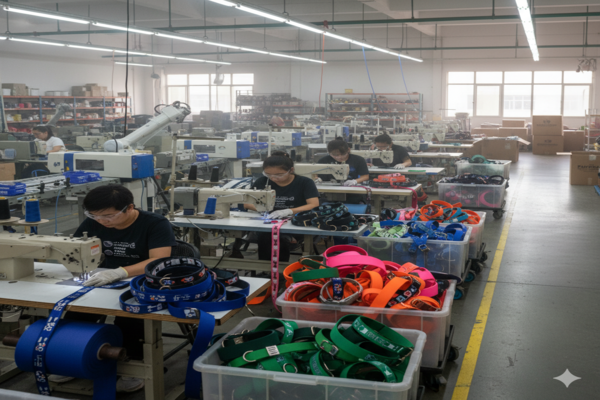
Turning a sketch on a napkin into a best-selling product line seems like a huge leap. As someone who has done this for over a decade, I can tell you it's a journey of careful, deliberate steps. It’s not about having one great idea; it’s about executing each stage with precision. I've guided countless partners through this process, helping them avoid costly mistakes and build brands that pet owners trust. Let’s break down exactly how you can do the same, covering everything from the raw materials to scaling up for big orders.
How do you select and source commercial-grade materials for durability and brand appeal?
Picking the wrong materials can lead to product returns and damage your brand. You need durable, safe, and attractive options. I will explain how to choose materials that last.
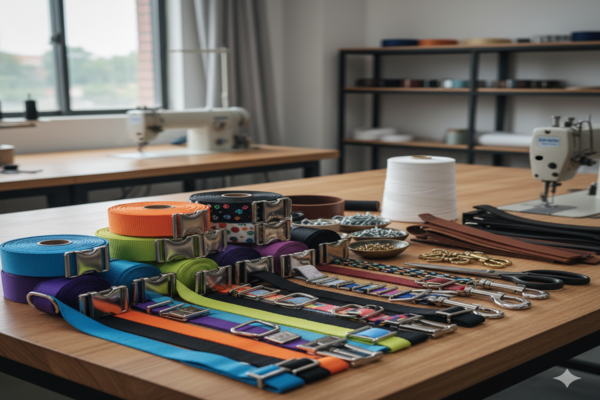
To select the right materials, first define your target market and brand identity. Source high-tensile strength webbing like nylon or polyester for durability, and use high-quality hardware. Always vet suppliers and request material specification sheets to guarantee performance and safety for every collar you produce.
Matching Materials to Your Brand Identity
The materials you choose say everything about your brand. Are you an eco-conscious brand? A luxury label? Or focused on rugged, outdoor gear? Your material choice is your first handshake with the customer. When I started Boonpets, I spent months testing different types of webbing. Nylon offers incredible strength and abrasion resistance, making it perfect for active dogs. Polyester holds vibrant, printed colors beautifully through sublimation, ideal for design-forward brands. For a premium feel, nothing beats the classic look and feel of genuine leather. You also need to consider hardware. A heavy, die-cast zinc alloy buckle feels substantial and secure, reinforcing a sense of quality. The key is to find a supplier who not only provides these materials but also understands their application. We ask for technical data sheets2 on everything—from tensile strength to UV resistance—to ensure every component meets our standards.
| Material | Best For | Brand Appeal | Durability |
|---|---|---|---|
| Nylon Webbing | Durability, everyday use | Rugged, reliable | High |
| Polyester Webbing | Vibrant custom prints | Fashion-forward, modern | High |
| Genuine Leather | Premium look and feel | Luxury, classic | Very High (with care) |
| PVC Coated Webbing3 | Waterproof, easy-clean | Practical, outdoor | Excellent |
How do you engineer collars for safety with weight-rated hardware and reinforced stitching4?
A collar failure can have terrible consequences for a pet and your brand. Don't risk your reputation on weak construction. I will show you how to build collars pet owners trust.
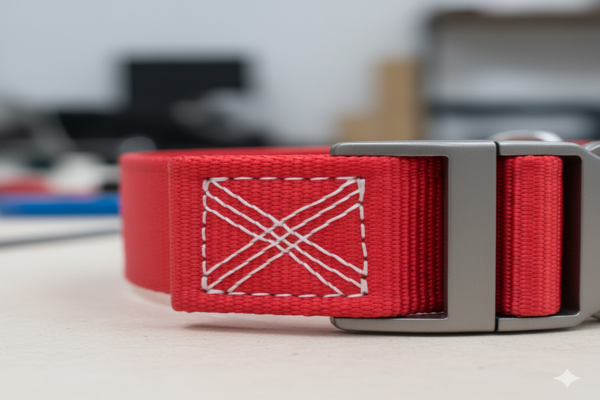
To engineer for safety, start with weight-rated hardware, ensuring buckles and D-rings can handle the force of the target dog's size. Use reinforced stitching like a "box stitch" at all stress points—especially where the D-ring and buckle are attached—to prevent catastrophic failure.
The Critical Role of Stitching and Hardware
Safety is not a feature; it's a requirement. I learned this early on after seeing a competitor face a massive recall because their buckles were snapping. The hardware you use must be appropriate for the size of the dog. A D-ring for a Chihuahua collar has very different requirements than one for a Great Dane. That’s why we source hardware with clear weight ratings. A good manufacturer will help you choose the right components. For example, stainless steel is excellent for corrosion resistance, while zinc alloy offers great strength and can be finished in various colors. Stitching is just as important. A simple straight stitch won’t hold up under pressure. We use bar-tack or box stitching on all stress points. This creates multiple layers of reinforcement, distributing the pulling force across a wider area and making a failure almost impossible.
| Component | Recommendation for Small Dogs (<20 lbs) | Recommendation for Large Dogs (50+ lbs) | Why It Matters |
|---|---|---|---|
| Buckle | Lightweight plastic or small zinc alloy | Heavy-duty metal (Cobra-style, die-cast) | Prevents accidental release |
| D-Ring | Welded steel D-ring | Welded, forged stainless steel | Anchor point for the leash; must not bend |
| Stitching | Box stitch with high-tensile thread | Double box stitch or bar-tack | Prevents webbing from pulling apart |
What advanced customization techniques can you apply for printing, engraving, and professional branding?
Generic products get ignored in a crowded market. Your brand needs to stand out. I'll explain professional customization techniques that will make your collars look unique and feel premium.
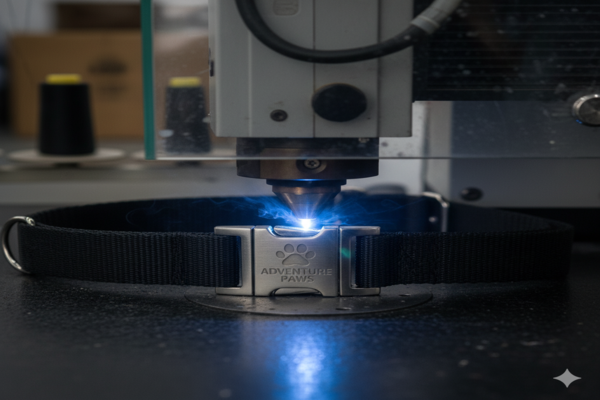
Use advanced customization like dye-sublimation5 for vibrant, full-color patterns on polyester webbing. Laser engrave your logo onto metal buckles for a sophisticated touch. Also, add branded woven labels or PVC patches. These methods create a unique, high-value product that strengthens your brand identity.
Choosing the Right Customization Method
Your branding is your story, and customization techniques are how you tell it. I've helped partners move from simple screen-printed logos to highly detailed, premium branding that transforms their products. The right method depends on your design, material, and budget. Dye-sublimation is my favorite for polyester because the ink becomes part of the fabric itself, so it won't crack or peel. It allows for unlimited colors and photorealistic detail. For hardware, laser engraving6 is the gold standard. It creates a clean, permanent mark that adds a touch of class and reinforces your brand every time a customer handles the collar. Beyond the collar itself, think about other branding elements. A small, woven label with your logo or a custom PVC patch stitched onto the collar adds another layer of professionalism. It’s these small details that separate a craft project from a professional product line.
| Customization | Best For | Durability | Brand Impact |
|---|---|---|---|
| Dye-Sublimation | Complex patterns, gradients | Excellent (won't fade) | High (vibrant, full-color) |
| Screen Printing | Simple, bold logos (1-3 colors) | Good (can crack over time) | Medium |
| Laser Engraving | Logos on metal hardware | Permanent | High (premium, subtle) |
| Woven Labels/PVC Patches | Adding a distinct brand tag | Excellent | High (adds texture and detail) |
How do you implement quality control for consistent sizing, color, and flawless production?
Inconsistent products erode customer trust and lead to negative reviews. You need a system to ensure every collar is perfect. I will outline a quality control process that works.
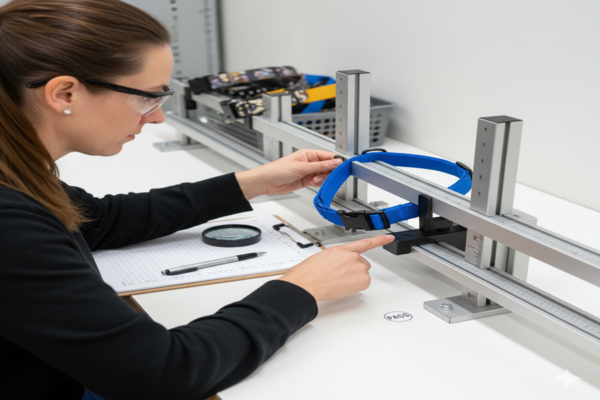
Implement a multi-stage quality control process. Use sizing jigs for consistent length and hole placement. Create master color swatches to check every batch against. Inspect stitching, hardware function, and branding on a percentage of units from every shipment to ensure flawless production and consistency.
Building a System for Flawless Consistency
Quality control isn't a single event; it's a culture. For my partners, consistency is everything. A customer buying a medium-sized collar today should get the exact same product if they buy it again next year. To achieve this, we don't just inspect the final product. We have checkpoints throughout the manufacturing process. It starts with incoming materials—we verify every roll of webbing and every batch of buckles. We use physical templates and jigs on the production line to ensure every collar is cut and punched to the same dimensions. For color, we reference approved Pantone color codes and physical master samples under controlled lighting. Finally, before anything ships, a dedicated QC team inspects a sample of the finished goods, checking everything from the stitch count to the smoothness of the buckle's action. This rigorous system is the only way to guarantee a flawless product every time.
| QC Checkpoint | What to Inspect | Why It's Crucial |
|---|---|---|
| Raw Materials | Webbing thickness, color accuracy, hardware finish | Prevents defects before production starts |
| During Production | Sizing accuracy, stitch patterns, logo placement | Catches errors early, saving time and money |
| Final Inspection | Overall appearance, hardware function, packaging | Ensures the final product meets brand standards |
How do you scale for the market by transitioning from craft production to profitable volume manufacturing?
Making a few collars by hand is one thing, but producing thousands is another. You need a path to scale profitably. I will share how to transition to volume manufacturing successfully.
To scale, partner with a manufacturer who can handle your growth. Start with a low Minimum Order Quantity (MOQ) to test the market, then increase volume as sales grow. A good partner offers scalable pricing, consistent quality at any volume, and helps manage logistics.
The Path from a Few to a Few Thousand
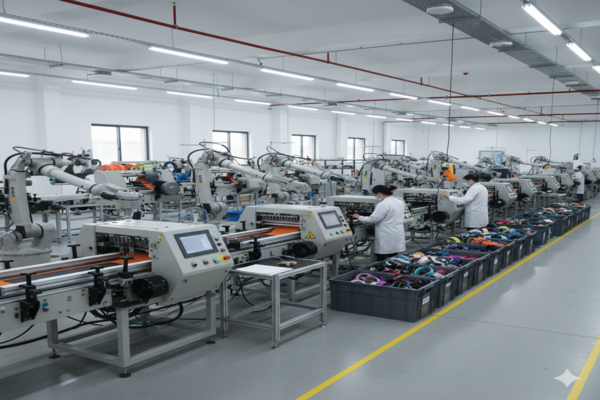
The dream of every brand owner is growth. But growth can break a business if it's not managed properly. I've seen brands fail because their handmade process couldn't keep up with demand, leading to long delays and unhappy customers. The key to scaling is finding a manufacturing partner who can grow with you. When we onboard a new partner at Boonpets, we often start with a small run of just a few hundred units. This allows them to test the market, get feedback, and refine their product without a huge financial risk. Our low MOQs are designed for this purpose. As their sales increase, we seamlessly scale production to thousands of units without sacrificing quality. This is possible because our factory is built for both flexible, small-batch runs and high-volume, automated production. When you're interviewing manufacturers, ask them about their scaling process, their capacity, and how they maintain quality as volume increases.
- Phase 1: Prototyping & Testing (10-50 units): Perfect the design and materials.
- Phase 2: Market Launch (200-500 units): Test the market with a low-risk initial order.
- Phase 3: Growth (1,000-5,000 units): Increase volume as demand is proven.
- Phase 4: Full Scale (10,000+ units): Leverage economies of scale for better pricing and wider distribution.
Conclusion
Creating a profitable dog collar line requires moving from idea to execution with a focus on materials, safety, branding, quality control, and a clear plan for scalable manufacturing.
Footnote:
Understand the critical steps in implementing quality control to maintain product consistency. ↩
Find out how technical data sheets ensure the quality and safety of materials used in dog collars. ↩
Find out why PVC coated webbing is a practical choice for waterproof and easy-to-clean dog collars. ↩
Explore the significance of reinforced stitching in ensuring the safety and longevity of dog collars. ↩
Discover how dye-sublimation can enhance the visual appeal of dog collars with vibrant designs. ↩
Learn how laser engraving can add a premium touch to your dog collar branding. ↩