Thinking of offering premium leather collars but worried about inconsistent quality and safety? You fear that a cheap imitation will crack, the hardware will fail, and your brand will get the blame.
A professional leather dog collar is crafted from full-grain, vegetable-tanned leather1 for maximum strength and safety. It features solid metal hardware and reinforced stitching2 at all stress points, with smoothed, burnished edges to ensure comfort. This combination creates a durable, premium product that builds brand equity.
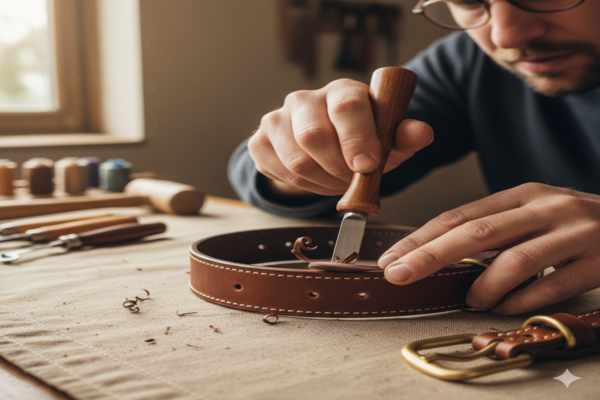
When I first started sourcing leather over a decade ago, a supplier showed me a beautiful, shiny leather hide. It looked perfect. But when we made a sample collar and put it under a stress test, it tore like cardboard. It was "genuine leather," a corrected-grain product that was all surface and no substance. That lesson was crucial: in the world of leather, what you can't see matters most. Let's break down the details that separate a true premium collar from a cheap look-alike.
What Do You Need to Make a Retail-Ready Leather Dog Collar?
You see DIY lists online with basic tools, but you know those won't create a product your brand can stand behind. Using hobbyist tools results in uneven cuts, weak connections, and an unprofessional finish.
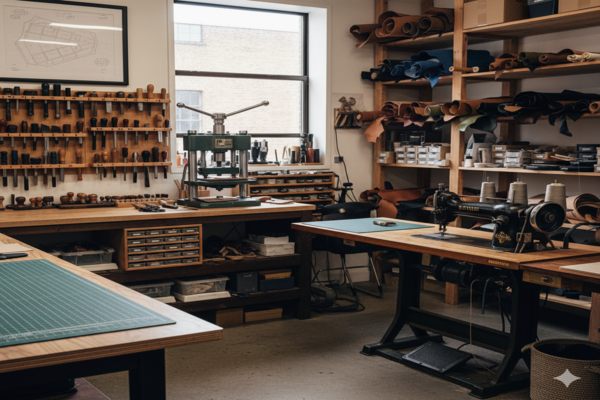
For a retail-ready product, you need industrial-grade equipment. This includes die cutters for precise shapes, skiving machines for uniform thickness, edge bevelers and burnishers for a smooth finish, and heavy-duty sewing machines3 for unbeatable strength. Anything less compromises quality and consistency.
The Difference Between Craft and Manufacturing
Making one nice collar by hand is an art. Making ten thousand of them identical, safe, and cost-effective is a science. This is where professional manufacturing comes in. The tools aren't just scaled-up versions of hobby tools; they are designed for precision, repeatability, and strength. When you're a procurement manager, you're buying the output of these machines.
Here’s a comparison of the tools we use at Boonpets versus what a hobbyist might use:
| Task | Hobbyist Tool | Industrial Equipment | Why It Matters for Your Business |
|---|---|---|---|
| Cutting Collar Straps | Utility knife, ruler | Clicker Press (Die Cutter) | Guarantees every collar strap is the exact same width and length for perfect consistency. |
| Thinning Leather Ends | Hand-held skiving knife | Bell Knife Skiving Machine | Creates a uniform, tapered thickness so buckles lie flat, producing a sleek, professional look. |
| Punching Holes | Manual hand punch | Hydraulic Press or Turret Punch | Ensures perfectly round, evenly spaced holes every time for a flawless appearance and fit. |
| Stitching | Hand needle and thread | Industrial Lockstitch Sewing Machine | Creates incredibly strong, tight stitches that won't unravel, ensuring the hardware stays secure. |
This industrial equipment is a major investment. It’s what allows us to produce high-quality leather collars at a scale and price point that makes sense for your retail business, without ever compromising the safety and consistency your brand depends on.
What's the Best Leather to Use for Dog Collars That Last?
You're faced with confusing terms like "genuine leather," "bonded leather," and "full-grain." Choosing the wrong one means you risk stocking a product that will quickly crack, stretch, and disappoint your customers.
The gold standard for durable, high-quality dog collars is full-grain, vegetable-tanned leather. It's the strongest part of the hide and uses a natural, non-toxic tanning process. This combination ensures maximum longevity and safety for pets.
Understanding Leather Grades and Tanning
The term "leather" is incredibly broad. The quality, durability, and cost can vary dramatically based on which layer of the hide is used and how it's processed. This knowledge is your first line of defense against poor-quality products.
Leather Grades Explained
The hide is split into layers, and each layer has a different name and quality level.
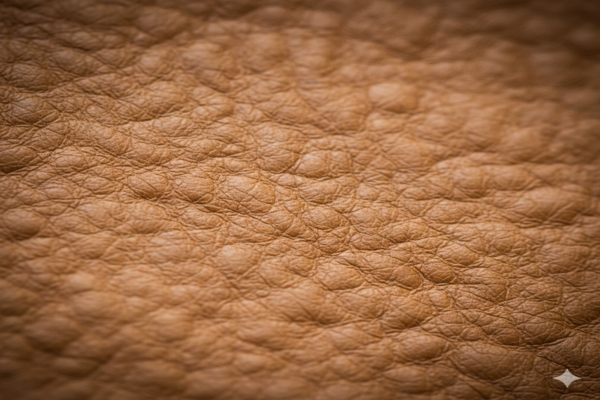
- Full-Grain: The top layer of the hide with all its natural imperfections and tight grain. It's the strongest and most durable part. It develops a beautiful patina over time.
- Top-Grain: The second-best. The very top surface is sanded off to remove imperfections, making it strong but slightly less durable than full-grain.
- Genuine Leather: This is a marketing term, not a grade. It's typically the lower-quality part of the hide that's been heavily processed, painted, and embossed to look like better leather. It has poor durability.
Tanning Methods Explained
This is how raw hide is preserved and turned into usable leather.
- Vegetable Tanning (Veg-Tan): An ancient process using natural tannins from tree bark. It’s eco-friendly and produces a firm, durable leather that is safe for skin contact. It's our preferred method.
- Chrome Tanning: A faster, cheaper process using chromium salts. It produces a softer, more water-resistant leather but can cause allergic reactions in sensitive dogs, and the chemicals are harsh on the environment.
Here’s how they stack up for your purchasing decisions:
| Leather Type | Description | Why It Matters for a Premium Collar |
|---|---|---|
| Full-Grain Veg-Tan | The strongest, most natural leather. Safe for pets. | The absolute best. Creates a durable, high-end product that gets better with age. Justifies a premium price. |
| Top-Grain Veg-Tan | Strong and durable with a more uniform look. | A very good, high-quality option that balances quality and cost effectively. |
| "Genuine Leather" | Low-quality leather, often painted. | Avoid this. It will crack and degrade quickly, leading to customer complaints and returns. |
| Bonded Leather | Scraps of leather glued together. | Not suitable for a load-bearing product like a dog collar. It's weak and will fall apart. Unsafe. |
For our brand partners, we almost exclusively recommend vegetable-tanned full-grain or top-grain leather. It aligns with the quality and safety standards that build a trustworthy brand.
Are Leather Collars a Safe and Comfortable Choice for Dogs?
Customers wonder if leather collars are heavy, stiff, or if the dyes are safe. Stocking a poorly made leather collar that causes chafing, allergic reactions, or breaks under pressure is a huge liability.
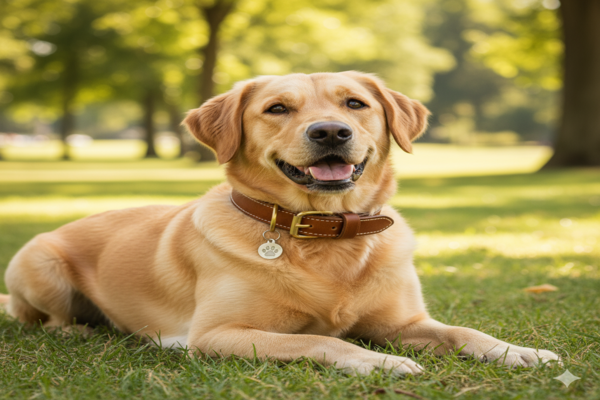
Yes, a well-crafted leather collar is one of the safest and most comfortable options. When made from vegetable-tanned leather with properly beveled and burnished edges, it is strong, hypoallergenic, and softens with the dog's natural oils, molding to their neck for a custom fit over time.
The Details That Define Safety and Comfort
A premium leather collar isn't just about the leather itself. It's about the craftsmanship that transforms a strip of hide into a safe and comfortable product. As a manufacturer, this is where we spend a huge amount of our focus.
Here are the critical finishing details you should look for:
-
Beveled and Burnished Edges: This is non-negotiable. A raw, square-cut edge on a leather strap is sharp and abrasive. It will chafe a dog’s neck.
- Beveling: We use a tool to round off the sharp corners of the leather edge.
- Burnishing: We then use friction and a conditioning agent (like beeswax) to smooth and seal that edge. The result is a sleek, dark, rounded edge that is completely smooth to the touch. This single detail is often the clearest sign of a high-quality collar.
-
Secure, High-Quality Hardware: A collar is only as strong as its buckle and D-ring.
- We use solid brass or stainless steel. These materials will not rust or break under pressure.
- We avoid cheap, plated metals (often "zinc alloy") which can corrode, and the plating can flake off, causing skin irritation.
-
Reinforced Stitching and Rivets: The points where the buckle and D-ring are attached bear the most force. We reinforce these areas using a combination of industrial lockstitching and securely-set metal rivets to create redundant safety systems.
Here’s a quick safety checklist for evaluating a leather collar:
| Feature | The Safe, High-Quality Version | The Unsafe, Low-Quality Version |
|---|---|---|
| Edges | Rounded, smooth, and sealed (burnished). | Sharp, square, and raw. |
| Hardware | Solid brass or stainless steel. | Plated zinc alloy; "pot metal". |
| Leather Tanning | Vegetable-tanned (natural and hypoallergenic). | Chrome-tanned (potential for chemical irritation). |
| Reinforcements | Heavy-duty stitching and/or metal rivets. | A single line of weak stitching or flimsy rivets. |
When you can confidently explain these safety features to your customers, you’re not just selling a product; you’re selling peace of mind.
Craft vs. Manufacturing: What's the Difference in Quality and Cost?
You want the unique look of a handcrafted item but need the price and consistency of a manufactured product. How do you find the right balance for your brand without sacrificing quality?
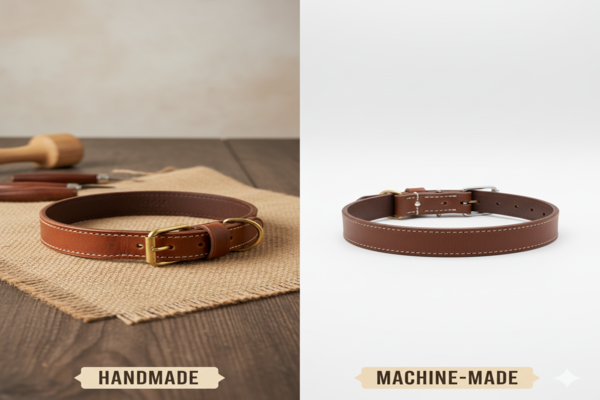
Artisanal craft focuses on one-off creations where slight variations are part of the charm. Manufacturing focuses on precision, consistency, and safety at scale. A good manufacturer combines both, using industrial processes to guarantee quality while retaining handcrafted finishing touches, ultimately delivering a superior product at a lower cost-per-unit.
Achieving Scalable Craftsmanship
The idea that "handmade" is always better is a common misconception in the retail space. For a safety product like a dog collar, consistency is quality. As a brand, you cannot afford to have one collar be weaker than another.
When you partner with a manufacturer like Boonpets, you get the benefit of what I call "scalable craftsmanship." We have invested in the machinery to handle the critical structural work, but we still employ skilled artisans for the finishing touches.
Here’s a breakdown of the real-world differences:
| Aspect | Artisanal Craft (One Person) | Professional Manufacturing (A Team) | Impact on Your Business |
|---|---|---|---|
| Consistency | Varies from piece to piece. | Extremely high. Every collar meets the same spec. | You can trust that every collar you sell is as safe as the last one. Fewer returns. |
| Cost Per Unit | High, due to slow, manual labor. | Lower, due to efficient processes and bulk material purchasing. | Better profit margins for you and a more competitive retail price for your customer. |
| Scalability | Very limited. Cannot fulfill large orders quickly. | High. Can produce hundreds or thousands of units on a predictable schedule. | You can meet customer demand and launch promotions with confidence, knowing you have the stock. |
| Safety Testing | None. Relies on personal judgment. | Formalized. Pull-force testing on stitching and hardware. | Dramatically reduces your liability and builds brand trust. |
A solo artisan might make 5-10 beautiful collars a day. Our teams can produce hundreds, with each one passing through multiple quality control checkpoints. You get the aesthetic of a craft product backed by the reliability of an industrial process. This is the sweet spot for a growing pet retail brand.
How Can You Customize Leather Collars for Your Brand Positioning?
The market has plenty of plain brown or black leather collars. How do you create a product that uniquely represents your brand and justifies a premium price to your customers?
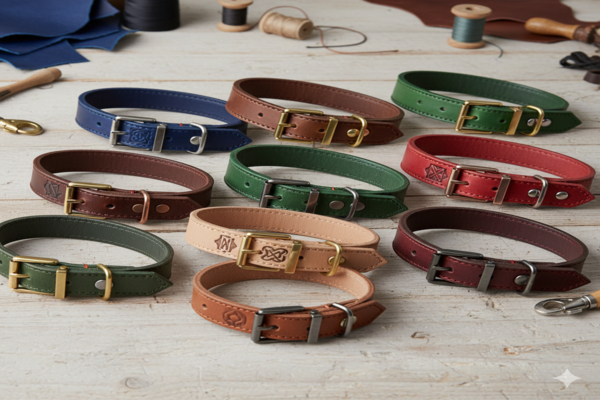
You differentiate through strategic customization. Choose a custom leather dye color, emboss your brand's logo directly into the leather, select unique hardware finishes like matte black, and add branded elements like custom-stamped rivets or a small metal charm.
Making Our Leather Collar Your Leather Collar
A leather collar is a fantastic canvas for branding. A few thoughtful details can transform it from a generic item into a signature product that customers associate only with your store. This is how you build a powerful brand identity.
Over the years, I've helped dozens of partners develop their unique leather collar lines. It's a collaborative process that focuses on telling your brand's story through the product itself.
Here are some of the most effective customization options we offer:
-
Custom Leather Colors: Don't be limited by standard brown and black. We can work with tanneries to create custom dye lots that match your brand's color palette. Imagine a deep navy blue or a rich olive green leather collar that is exclusive to you.
-
Logo Embossing/Debossing: We can create a custom metal stamp of your logo and permanently press it into each collar. It’s a subtle, elegant, and permanent mark of quality that screams "premium."
-
Custom Hardware: As mentioned before, moving beyond standard chrome hardware makes a huge difference. A collar with a solid brass buckle and a matching brass logo charm has a completely different feel than a standard one.
-
Branded Rivets: For a very subtle touch of class, we can even have the caps of the rivets stamped with a small icon or letter from your brand. It's a detail that discerning customers will notice and appreciate.
Here’s a table to spark some ideas:
| Customization | Standard Approach | Your Brand's Custom Approach | Brand Message |
|---|---|---|---|
| Logo | A printed hang-tag. | A clean logo embossed into the leather. | "Our quality is permanent, not disposable." |
| Color | Standard Black/Brown. | A custom-dyed brand color (e.g., forest green). | "We have a unique, curated style." |
| Hardware | Generic shiny chrome. | Solid brass or matte black hardware. | "We focus on modern, designer details." |
| Packaging | Plastic bag. | A branded cotton drawstring bag. | "This is a premium gift, for you or a friend." |
Partnering with a flexible OEM/ODM manufacturer allows you to make these choices and build a product that is undeniably yours.
Conclusion
Creating a successful leather dog collar line is about balancing strength, safety, and style. By understanding the right materials and craftsmanship, you can offer a premium product that builds trust and loyalty.
Footnote: